
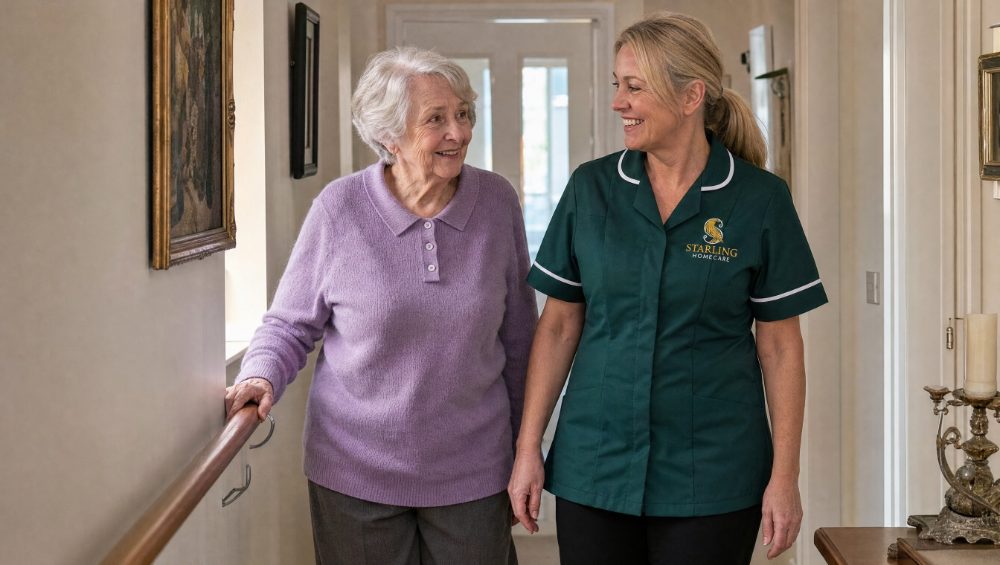
Arthritis and falls are closely linked, because painful, stiff joints and weaker muscles make walking and stairs less steady. The NHS names arthritis among the conditions that make falls more likely. A tidier home, strength and balance activity and a GP review can all lower the risk.
To talk anything through with someone local, our Hemel Hempstead team is on 01442 954 137.
Why does arthritis make falls more likely?
The NHS falls guidance lists conditions that affect mobility or balance, such as arthritis, among the causes of falls. It also names weaker muscles with age, low blood pressure, some medicines, and eyesight or hearing problems.
For someone with arthritis, several of these can stack up. Arthritis UK warns that stopping regular movement, even for a short time, can lead to stiffness and loss of movement.
After a fall, our article on the falls clinic in Hertfordshire explains what a falls service looks at. For day to day support with painful joints, see our arthritis care at home.
Fear of falling matters too
Arthritis UK, formerly Versus Arthritis, notes that people who have fallen and been injured may be afraid of falling again. It says regular strength and balance exercises can help build confidence with everyday movements, such as using the stairs or the shower.
Arthritis UK also points out that people with osteoporosis are at greater risk of a fracture if they fall. So it is worth knowing whether bone health has been checked.
What helps with arthritis and falls at home?
Most of what helps is practical and unglamorous. The NHS and Arthritis UK both suggest a few simple changes:
- Clear clutter, trailing wires and loose rugs or mats from walkways.
- Leave enough space around furniture to move without squeezing past.
- Keep stairs, the hall and the landing well lit.
- Use a non-slip mat in the bath or shower.
- Consider grab rails in the bathroom, safety rails on steps, and a rail by the front door.
- Wear well fitting shoes or slippers with a good grip.
Arthritis UK suggests speaking to an occupational therapist about daily needs and equipment. Its aids and adaptations guide also says you can ask your local council for a free needs assessment.
Small habits that make a difference
In our experience, the riskiest moments are often the hurried ones. For example, rushing to answer the door, carrying a full tray, or getting up quickly from a low chair. Keeping the phone within reach, using a trolley, and taking a moment after standing all help.
Does exercise help, even with painful joints?
The NHS recommends strength and balance activities at least twice a week. Arthritis UK says regular strength and balance exercises can reduce the risk of a fall. It also suggests tai chi and yoga for balance.
What suits one person may not suit another, especially with inflamed or replaced joints. So it makes sense to ask the GP or a physiotherapist which exercises are right. Then a carer or family member can encourage your parent to keep them up.
When should you ask the GP?
The NHS says to see a GP about any fall, or any worry about balance. The GP will check balance and may refer to a falls service. That can include checks for muscle weakness, osteoporosis and eyesight. It may also include strength and balance training, a home safety check and a medicines review.
If you think a medicine is affecting your parent's balance, the NHS advice is to speak to a GP or pharmacist.
What to do if a fall happens
Stay calm and check for pain or injury first. The NHS says to call 999 if the person may have hurt their head, back, neck or hip, or cannot get up. Do not lift them yourself. Call 111 if they may be in pain, injured or unwell.
If they cannot get up, keep them warm, help them change position gently about every 30 minutes. A personal alarm or a phone they can always reach makes this far less frightening for someone living alone.
How carers help with arthritis and falls
Good care is often about noticing. A regular carer spots the new rug, the worn slipper or the extra stiffness on a cold morning. Then they mention it before it becomes a fall. Our falls prevention support is built around that kind of noticing.
Carers also give unhurried help with washing, dressing and moving around the house, so your parent does not have to rush. Our guide to what happens in a home care visit shows how that time is used. If mornings are the hardest part, our piece on making mornings with rheumatoid arthritis easier may help too.
Frequently asked questions
Does Starling Homecare provide arthritis care at home?
Yes. Starling Homecare is an independent, family run home care provider based in St Albans and registered with the Care Quality Commission. We support people living with arthritis with visiting care in St Albans, Harpenden, Hemel Hempstead, Welwyn Garden City and Hatfield, Potters Bar and Cheshunt, and with live-in care across Hertfordshire.
Should my parent use a walking stick or frame?
The NHS suggests considering a walking aid. The right one depends on the person, so ask the GP, a physiotherapist or an occupational therapist.
Can arthritis medicines cause falls?
Some medicines can affect balance as a side effect, according to the NHS. A pharmacist or GP can review them.
Is it safe to keep active with arthritis?
Arthritis UK says regular activity can ease stiffness and pain. Both the NHS and the charity link strength and balance work with fewer falls. A physiotherapist can tailor it.
Can a carer pick my parent up after a fall?
The NHS advises against lifting someone yourself. It says to keep the person comfortable and warm, and to call 999 if they may have hurt their head, back, neck or hip or cannot get up, or 111 if they may be in pain, injured or unwell.
A steady routine and a familiar face can make home feel safe again after a scare. Our Hemel Hempstead team supports people across the town, including Boxmoor, with visiting care from 30 minute visits and live-in care when more help is needed. Starling Homecare is independent, family run and registered with the Care Quality Commission. You can read more on our home care in Hemel Hempstead page.
Figures and guidance checked on 20 November 2026 against the NHS falls guidance and Arthritis UK.
Arranging Care Is Simple
Starting care can feel like a big step. We keep it calm and straightforward, and we are here to guide you from your very first call.
1. Talk to us
Get in touch by phone or request a callback. We will listen, answer your questions and help you understand the options, so you can decide what feels right in your own time.
2. A home visit and initial consultation
We arrange a visit to understand your routines, your home and what matters most to you. Together we agree an initial consultation and shape the support that feels right.
3. Your care begins
A small, familiar team starts your care, arriving at the agreed times and staying involved as your needs change. We remain your trusted adviser throughout.
Whenever you are ready, we are here to help.