
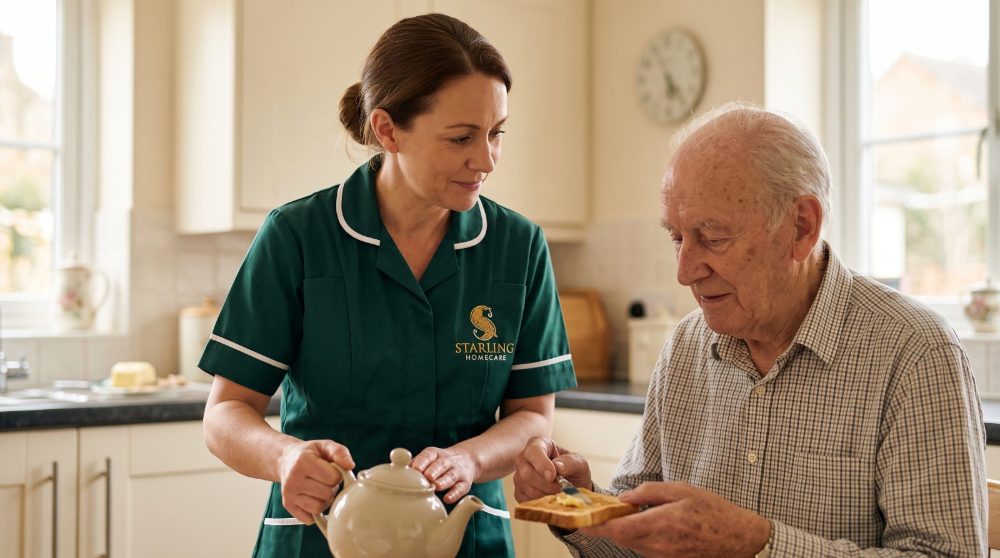
Swallowing problems after stroke, known as dysphagia, are common, and the safest help at home is to follow the speech and language therapist's plan exactly. That means the right textures, the right position and plenty of time at every meal, with any change in swallowing reported quickly.
To talk anything through with someone local, our St Albans team is on 01727 324 127.
Why does a stroke affect swallowing?
Swallowing feels automatic, but it relies on the brain coordinating many muscles in the mouth and throat. A stroke can damage the parts of the brain that control them. As a result, food, drink or even saliva can go into the airway instead of the stomach.
This is called aspiration, and it matters because it can lead to a chest infection. The swallowing leaflet from West Hertfordshire Teaching Hospitals says around half of people have trouble swallowing straight after a stroke. However, many people improve. The Stroke Association says most can swallow safely again within the first few weeks.
If you are still working out who does what in the months after hospital, our guide to the help available after a stroke at home is a good place to start.
Who decides what someone can eat and drink?
A speech and language therapist, often shortened to SLT, assesses swallowing and decides what is safest. In hospital, the stroke team checks swallowing soon after arrival. Then the SLT may recommend softer or pureed food, thickened drinks, a particular sitting position or swallowing exercises.
Hospital teams describe textures using a shared scale called IDDSI, and the West Herts leaflet uses it. So the levels written on a discharge letter should match what was served on the ward. If anything on the paperwork is unclear, ask the SLT before the first meal at home, not after.
Why the plan is not ours to change
Our carers never thicken drinks differently, soften food further or relax a texture because someone is fed up with it. Those decisions belong to the SLT, and sometimes a dietitian. What a carer can do is follow the written plan carefully, notice how each meal goes and pass that on. You can read how this sits within a written care plan at home.
Helping at mealtimes with swallowing problems after stroke
The practical advice from the Stroke Association's guide to swallowing problems is mostly about pace, posture and attention. For example:
- Sit fully upright. Use any different position only if the SLT has set one.
- Choose an alert moment. Avoid offering food or drink when the person is tired or drowsy.
- Small amounts, often. Little and often can be easier than three large meals.
- No straws unless the therapist has approved them.
- Allow plenty of time. Give privacy and never rush.
Food also needs to look worth eating. The Stroke Association suggests presenting it attractively, saying what is on the plate and treating the person as the adult they are. A pureed meal is still a meal, and it deserves the same care as anyone else's.
What signs should families watch for?
Swallowing problems are not always obvious, so it helps to know the signs. The NHS and the Stroke Association list several:
- coughing or choking during or just after eating or drinking
- a wet, gurgly or croaky voice after swallowing
- food left in the mouth, or drooling
- meals taking much longer than before
- breathlessness after eating or drinking
- repeated chest infections, weight loss or signs of dehydration
The NHS guidance on swallowing problems says to ask for an urgent GP appointment, or contact NHS 111, if someone coughs or chokes while eating or feels something is stuck. If a person is choking and cannot breathe, call 999.
How visiting care helps with swallowing problems after stroke
Mealtimes are often where family carers feel most anxious.
In practice, a carer can prepare meals and drinks to the textures the SLT has set, help the person sit well and stay with them while they eat. They also keep a short note of how much was eaten and drunk. Because personal care at home sits alongside this, mouth care and a change of clothes after a difficult meal are part of the same visit.
If a carer notices coughing, a wet voice or a refused meal, they tell the family and, where agreed, the GP or SLT. They do not assess swallowing, change textures or manage feeding tubes; those stay with the clinical team. Our stroke care at home is built around that line, so families know who to ask about what.
Frequently asked questions
Does Starling Homecare provide stroke care in Hertfordshire?
Yes. Starling Homecare is an independent, family run provider based in St Albans and registered with the Care Quality Commission. We provide stroke care at home in Hertfordshire, through visiting care and live-in care. You can read more on our stroke care page.
Does swallowing usually improve after a stroke?
Often, yes. The Stroke Association says only a very small number of people are left with lasting difficulties. The SLT reviews progress and updates the plan as swallowing changes, so the plan at home may change too.
Dad seems fine now. Can he go back to normal food?
Only when the speech and language therapist says so. Swallowing problems are not always visible, so feeling well is not the same as swallowing safely. Ask for a review rather than testing it at home.
What if Mum will not drink her thickened drinks?
Tell the SLT, because they can look at the reasons and at what else might work. Meanwhile, keep offering what is on the plan and note how much she drinks. Dehydration is one of the risks the NHS lists, so the amount matters.
Who should we call if swallowing seems worse?
Contact the SLT or GP if new signs appear or old ones return. For urgent worries use NHS 111, and call 999 in an emergency.
Mealtimes are one of the things our stroke visits are planned around. As a family run, CQC registered provider based in St Albans, Starling Homecare offers visiting care from 30 minute visits upwards and live-in care across Hertfordshire. Our carers prepare meals to the therapist's plan, sit with the person while they eat and keep everyone informed, so meals at home can stay safe and still feel like meals.
Figures and guidance checked on 8 November 2026 against West Hertfordshire Teaching Hospitals' swallowing leaflet, with the Stroke Association and NHS pages linked above.
Arranging Care Is Simple
Starting care can feel like a big step. We keep it calm and straightforward, and we are here to guide you from your very first call.
1. Talk to us
Get in touch by phone or request a callback. We will listen, answer your questions and help you understand the options, so you can decide what feels right in your own time.
2. A home visit and initial consultation
We arrange a visit to understand your routines, your home and what matters most to you. Together we agree an initial consultation and shape the support that feels right.
3. Your care begins
A small, familiar team starts your care, arriving at the agreed times and staying involved as your needs change. We remain your trusted adviser throughout.
Whenever you are ready, we are here to help.