
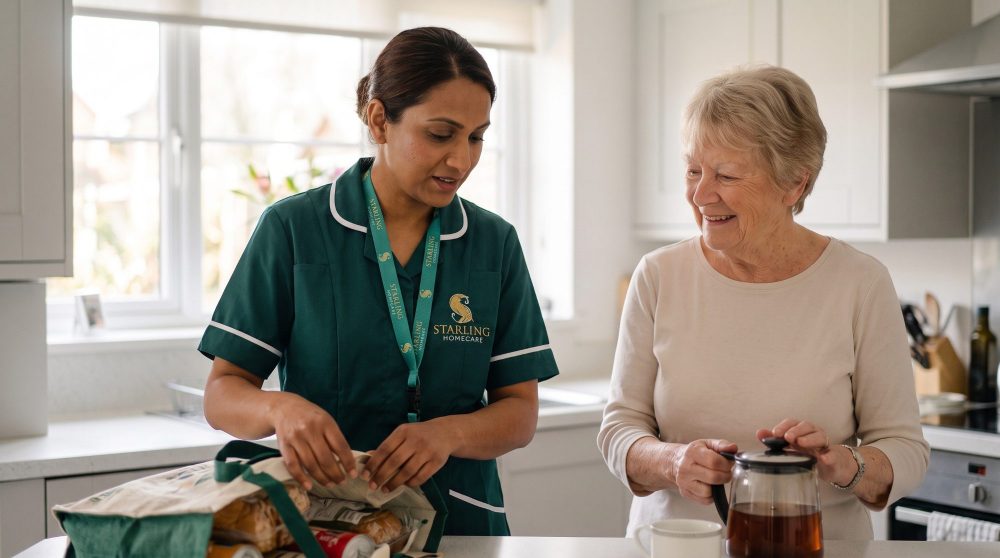
For some people, yes, at least for a time. The Alzheimer's Society notes that some people with dementia choose to live alone, so a diagnosis on its own does not mean someone must move or have a person with them all day. So rather than asking only can someone with dementia live alone, it helps to ask what support makes it safe for this person now, and how the family will know when that changes.
To talk anything through with someone local, our Welwyn Hatfield team is on 01707 714 000.
What decides whether living alone is still safe?
Dementia affects people very differently. Two people with the same diagnosis can need completely different levels of help. So it is worth looking at daily life in a few plain areas, rather than at the diagnosis.
- Eating and drinking: are meals being made, and is food in the fridge still fresh?
- Medicines: are tablets being taken as prescribed, or are blister packs left full?
- Safety in the home: the Alzheimer's Society notes people may forget to turn off lights or the oven.
- Getting out and back: are trips to the shops still going smoothly?
- Money and post: are bills paid, and are there signs of scam calls or letters?
- Company: does the person seem content, or lonely and anxious when alone?
- Nights: are they settled, or up and unsettled in the small hours?
If some things are fine and one or two are slipping, that can point to targeted help, not a sudden move.
Sometimes the hardest part is that the person does not want help at all. If that is where you are, our article on what to do when someone with dementia refuses carers may help.
Whose decision is it?
Where someone lives is, first of all, their decision. The Mental Capacity Act 2005 sets out five principles. A person must be assumed to have capacity unless it is established that they lack it.
The Act also says a person should not be treated as unable to decide until all practicable steps to help them have been taken. Importantly, making a choice others think unwise is not, by itself, proof that someone lacks capacity.
Where a person does lack capacity for a decision, anything done for them must be in their best interests. It should also be the option that least restricts their rights and freedom. In practice, that means families, professionals and the person work it out together, and the person's wishes carry real weight.
Can someone with dementia live alone with the right support?
It can be. The Alzheimer's Society's guide to living alone with dementia encourages people to put support in place as soon as they feel ready, even if they need little help yet. It also says telling people about the diagnosis means they can offer help that fits.
A needs assessment from the council
The NHS suggests asking the council's adult social services for a needs assessment, which should be face to face. A relative or friend can come along to help describe what is happening.
Technology and simple aids
The NHS page on staying independent with dementia describes telecare, such as alarms, movement sensors and smoke and carbon monoxide detectors. After an assessment, the council may provide a monitoring system, although you may have to contribute. Reminder devices, pill dispensers and big button phones can help too.
People, routine and company
Technology works best alongside people. Regular visits keep the day recognisable: a meal made together, tablets prompted, the post opened and a proper conversation. Local activities matter as well, and our What's On guide for Welwyn Hatfield lists things to do locally.
Our guide to the types of home care explains how visiting, overnight and live-in care differ.
Signs that living alone is getting harder
The answer to can someone with dementia live alone is rarely settled once and for all. Change is often gradual, so keep a simple note of what you notice. Signs to look out for include:
- meals missed or the same food bought again and again
- medicines left untaken, or taken twice
- a pan left on the hob, or doors left open at night
- getting lost on a familiar route
- calls to family at night, worried or confused
- a fall, or a near miss nobody saw
None of these means the end of living at home. However, each one is a reason to review the plan. That might mean longer or more frequent visits, overnight care, or live-in care, where a carer lives in the home. Our wider article, can my elderly parent still live alone?, covers the same question without a dementia diagnosis.
Talking to your parent about it
Start with what they want to keep, not with what they can no longer do. For example, "How can we make sure you can stay here?" lands very differently from "You can't manage." Also, choose a calm time of day, keep it short, and come back to it.
The Alzheimer's Society also notes that planning ahead matters more for someone living alone, because others may not know their wishes. Writing those wishes down early protects the person's voice later.
Frequently asked questions
Does Starling Homecare provide dementia care in Hertfordshire?
Yes. Starling Homecare is an independent, family run provider based in St Albans and registered with the Care Quality Commission. We provide dementia care at home in Hertfordshire, through visiting care and live-in care. You can read more on our dementia care page.
Is it wrong to let a parent with dementia carry on living alone?
Not in itself. The law starts from the presumption that a person can make their own decisions. The aim is to support that choice safely and review it as things change.
Is telecare enough on its own?
For some people early on, it may cover particular risks, such as smoke or a fall. But a sensor cannot make lunch or notice that someone seems low. Technology can be combined with regular visits.
How many visits a day does someone with dementia need?
There is no standard number. It depends on which parts of the day are hard, and a care assessment can help find that out. Visits can be as short as 30 minutes or much longer.
How Starling Homecare can help
Starling Homecare is a family run provider registered with the Care Quality Commission, and our team covering Welwyn Garden City, Hatfield, Brookmans Park and Welham Green supports people with dementia to stay in their own homes. Our dementia care at home can begin with a few visits a week and grow as needs change, through to overnight or live-in care. For more about the local team, see our page on home care in Welwyn Hatfield.
Arranging Care Is Simple
Starting care can feel like a big step. We keep it calm and straightforward, and we are here to guide you from your very first call.
1. Talk to us
Get in touch by phone or request a callback. We will listen, answer your questions and help you understand the options, so you can decide what feels right in your own time.
2. A home visit and initial consultation
We arrange a visit to understand your routines, your home and what matters most to you. Together we agree an initial consultation and shape the support that feels right.
3. Your care begins
A small, familiar team starts your care, arriving at the agreed times and staying involved as your needs change. We remain your trusted adviser throughout.
Whenever you are ready, we are here to help.