
Some forgetfulness is a normal part of getting older. So if you have noticed Mum getting forgetful, it is not automatically a sign of dementia. The NHS says to see a GP if memory problems affect day-to-day life, or if an older relative is becoming increasingly forgetful. If she suddenly becomes confused, the NHS says go to A&E or call 999.
To talk anything through with someone local, our Hitchin team is on 01462 534739.
Maybe it was the same story told twice in one phone call, or a birthday card that did not arrive this year. When it is your mum, even small lapses can stay with you for days. You might feel unsure whether you are worrying over nothing, or sad at the thought that something may be changing. And if a brother or sister sees it differently, or Mum brushes it off, it can be hard to know whether to raise it at all.
These are steps we have walked through with families before, and you do not have to work them out alone.
Wanting to understand what is going on is a sensible response, and the steps below are a calm place to start.
Mum getting forgetful: what is normal and what is worth checking
Everyone forgets things. The Alzheimer's Society guide to memory changes gives examples of normal ageing, such as forgetting the names of people you do not know well, or misplacing keys or glasses.
It is worth a closer look when things change faster, or start getting in the way of everyday life. The Alzheimer's Society says dementia is different from "just getting old" because abilities become noticeably worse over several months, and everyday tasks get harder to manage alone. Putting house keys in the fridge is one example it gives.
The NHS is also clear that dementia is not a natural part of ageing. Its list of early signs includes difficulty concentrating, struggling to follow a conversation, confusion about time and place, and mood changes.
What it can mean
Many causes of forgetfulness are treatable. The NHS page on memory loss names stress, anxiety or depression, and sleep problems as common ones. The Alzheimer's Society lists other health problems that can affect memory, including:
- chest or urinary tract infections
- thyroid problems
- low vitamin B12
- side effects of medicines
- problems with eyesight or hearing
Only a qualified health professional can diagnose dementia. The NHS says the GP will ask questions to try to find out what is causing the memory problems.
What to do today and this week
You do not need answers today, just a clear next step.
- Write down examples. The Alzheimer's Society suggests making notes before going to the GP and taking them along.
- Book a GP appointment. The NHS says it helps to bring someone who can describe the problems, so offer to go with her.
- Bring her medicines list. The Alzheimer's Society suggests asking a GP or pharmacist whether a medicine may be causing memory or thinking problems.
If she suddenly becomes confused, do not wait for the appointment. Follow the NHS advice and go to A&E or call 999.
How to raise it with your mum
This can be one of the harder conversations, because it is your mum, and because it touches on something personal. The Alzheimer's Society suggests finding a quiet time when you will not be interrupted, using reassuring and non-judgemental language, and gently asking whether she has noticed any changes herself. For example:
- "You've seemed tired lately, Mum. Shall we get a check up, just to rule things out?"
- "The GP can check for simple things like an infection or your thyroid. I'd feel better knowing."
- "I'll come with you, and we can go for lunch afterwards."
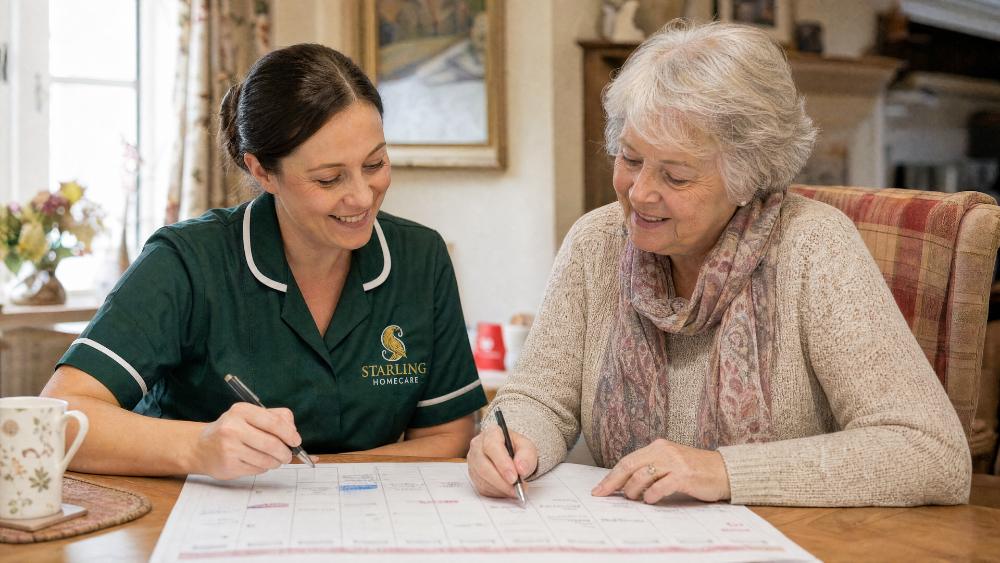
If she is unsure about any help at home, it can start with someone from our team simply coming round for a chat. It does not have to be formal. It is a conversation to get to know her and find out what matters to her, and it often breaks the ice. We have a lot of experience with these first visits.
Who to call in Hertfordshire
Start with her GP. The NHS says the GP may refer her to a memory specialist for a more detailed assessment. In north Hertfordshire, Hertfordshire Partnership University NHS Foundation Trust lists its Early Memory Diagnosis and Support Service for the Hitchin area as based at Saffron Ground in Stevenage.
For practical help, call HertsHelp on 0300 123 4044, Hertfordshire County Council's free advice service. For questions about memory and dementia, the Alzheimer's Society's Dementia Support Line is on 0333 150 3456.
Our guide to what happens at a memory assessment explains the steps after the GP in more detail.
How Starling Homecare can help
Some support at home now is not a sign that things are falling apart. It is sensible planning that helps your mum stay independent in her own home, and lets you stay her son or daughter rather than her daily reminder.
With Mum getting forgetful and living alone, a short regular visit can give the day a steady shape. Visiting care starts from 30 minute visits, and our dementia and memory care at home can include:
- Gentle reminders about appointments, meals and the day ahead.
- Medication prompting and support, so tablets are taken as the GP or pharmacist intended.
- Meal preparation and help with drinks.
- Companionship, a familiar face and some conversation.
- Regular updates for the family, so you hear about changes early.
The carer's role is to notice, prompt and reassure. They pass concerns to you and, with consent, to the GP. Carers do not assess memory or carry out clinical tasks. That support matters most when family live further away, for example if you are in London and your mum is in Ickleford or Benslow.
We would usually start small, with a short visit at a regular time, and stay alongside you as things change. Visits can increase if her needs grow, and overnight or live-in care is there later if it is ever needed.
Our article on whether a parent living alone in Hitchin is still managing covers the signs to look for on your next visit.
Areas we cover
Starling Homecare's carers visit people at home in St Albans, Harpenden, Hemel Hempstead, Berkhamsted, Tring, Radlett and Shenley, Welwyn Garden City and Hatfield, Potters Bar, Hitchin and Hertford, and we arrange live-in care across Hertfordshire.
There is more in our guide for families worried about an elderly parent, and you can read about our home care in Hitchin.
Frequently asked questions
At what point should I worry about my mum's memory?
The NHS says most people forget things sometimes. If memory problems start to affect day-to-day life, the NHS says to see a GP. The Alzheimer's Society says dementia is different from normal ageing because abilities become noticeably worse over several months.
Can a GP test for dementia in one appointment?
The NHS says the GP will ask questions to find out what is causing the memory problems, and may refer on to a memory specialist for an in-depth assessment. Scans or other tests are sometimes needed.
What if Mum does not want to see the GP?
That can be frustrating when you are the one who is worried. The NHS suggests bringing someone who can describe the problems, so offering to go with her may help. If you are worried about how she is managing in the meantime, HertsHelp on 0300 123 4044, the council's free advice service, can help you find a suitable care provider.
If you would like to talk about light support while you wait for answers, our Hitchin team is on 01462 534739. You will be speaking to someone who arranges care every day, and we can explain how visits work and what a first week might look like, at whatever pace suits you.
Guidance checked on 26 October 2026 against the NHS memory loss and dementia symptoms pages, the NHS confusion page and the Alzheimer's Society.
Arranging Care Is Simple
Starting care can feel like a big step. We keep it calm and straightforward, and we are here to guide you from your very first call.
1. Talk to us
Get in touch by phone or request a callback. We will listen, answer your questions and help you understand the options, so you can decide what feels right in your own time.
2. A home visit and initial consultation
We arrange a visit to understand your routines, your home and what matters most to you. Together we agree an initial consultation and shape the support that feels right.
3. Your care begins
A small, familiar team starts your care, arriving at the agreed times and staying involved as your needs change. We remain your trusted adviser throughout.
Whenever you are ready, we are here to help.