
Hertfordshire County Council is consulting on its draft Local Transport Plan 2027 to 2050 until 9 November 2026. If your parent no longer drives, the Hertfordshire Local Transport Plan is a chance to say plainly what reaching a GP, a clinic or the shops is really like.
To talk anything through with someone local, our Harpenden team is on 01582 824 830.
What is the Hertfordshire Local Transport Plan?
The plan is the council's vision for transport in the county over the next 25 years. It will guide how roads, bus services, rail links, cycleways and other active travel routes develop.
The current consultation opened on 28 September 2026. It follows an earlier stage in late 2025. Then, the council asked for views on a draft vision with three themes: safe, accessible and sustainable travel. The council described accessible transport as reliable, inclusive and easy to use.
Nothing changes for anyone's journeys this autumn. However, the plan will shape decisions for many years, so the views of older and disabled residents matter now. If an appointment is coming up soon, our guide to helping a parent through hospital appointments covers the day itself.
How do you respond before 9 November?
First, open the council's consultation page for the Hertfordshire Local Transport Plan. From there you can read the draft plan and complete the survey. Questions go to the council's Strategic Transport and Rail Team at LTP@hertfordshire.gov.uk.
The council page does not mention paper copies or other formats. So if your parent is not online, email the team and ask how they can take part.
You can also help a parent respond in their own words. For example, sit together with the survey open on a laptop and read each question aloud.
What is worth telling the council?
Specific experiences carry more weight than general complaints. The details that often matter most to older people are practical ones:
- how far away the nearest bus stop is, and whether there is a seat
- whether a trip to a hospital clinic needs one bus or three
- kerbs, crossings and pavements that are hard with a stick or a walker
- evening and weekend journeys, when there may be no bus at all
- how hard it is to find and book community transport
Say what happened, when and where. Then say what would have made the journey possible.
Getting to appointments without driving: what exists now
The plan looks decades ahead, but families need answers this week. Hertfordshire already has several options, and many people have never heard of them.
NHS non-emergency patient transport
The East of England Ambulance Service provides non-emergency patient transport across Hertfordshire. According to the local NHS patient transport page, someone may qualify if they need trained staff or equipment on the journey. They may also qualify if a health condition affects their mobility.
It is not for people who can travel by car or public transport without harm to their health. To check eligibility or book, call 0345 605 1208. Have the NHS number, GP surgery details and both addresses ready.
Help with travel costs
Some people can claim back the cost of travel to hospital or specialist appointments. The NHS Healthcare Travel Costs Scheme covers people on certain benefits, such as Pension Credit Guarantee Credit, and some people on a low income. The appointment must follow a referral, and postal claims can be made up to three months after the appointment.
Dial-a-Ride and community transport
The council runs Dial-a-Ride, a door to door service for people over 75 and anyone with a permanent disability. It covers trips to the GP, the dentist, the shops or a friend's house. Fares are £2.10 for the first mile, then 50p a mile.
The Dial-a-Ride line is 01992 556771, Monday to Friday, 9am to 4.30pm. Community Transport Hertfordshire also lists car schemes, minibuses and community buses. Search by postcode to see the nearest ones.
Why transport matters for staying well at home
Giving up the car often means losing more than journeys. The first thing to go is often the small, unplanned outing. That might be a coffee in the High Street, or a visit to a friend in Batford or Southdown.
Then medical appointments begin to feel like expeditions. Some people quietly put them off, and a missed check can matter.
So transport is also about health and loneliness in later life. That is why the consultation is worth answering, and why practical help is worth sorting out now.
Where companionship care fits
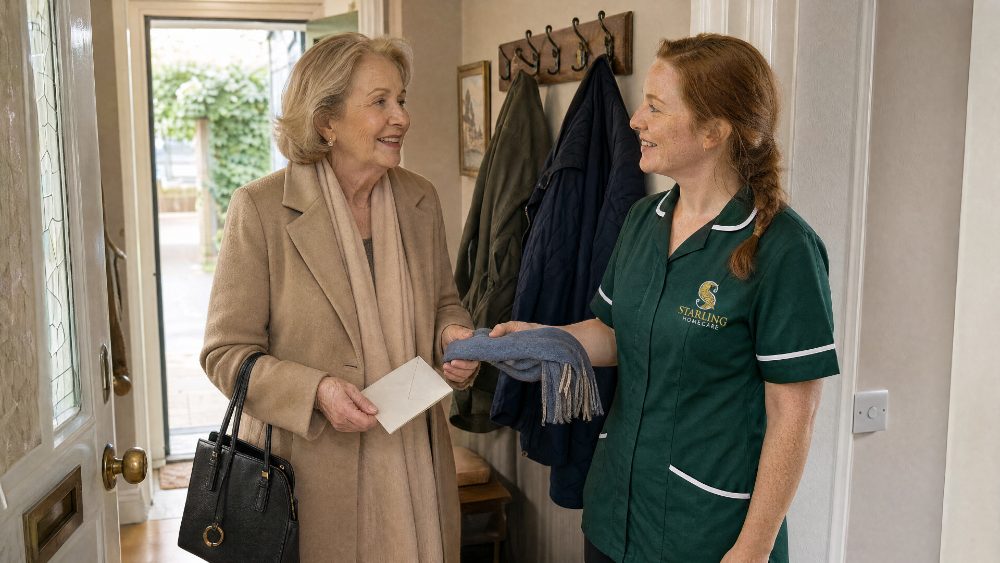
A companion cannot change a bus timetable. However, a carer can go with your parent to an appointment and sit with them in the waiting room. Afterwards, they can help them settle back at home.
Our companionship care includes going with people to appointments, the shops, social groups and places of worship.
Frequently asked questions
Can I fill in the transport survey with my parent?
Yes. Many older people find an online survey easier with someone beside them. Make sure the answers reflect their own experience, and add your own response as a family carer if you wish.
Will the consultation change bus routes straight away?
No. It is a consultation on a long-term draft plan running to 2050. It does not alter any current service, so check today's timetables with the bus operator.
Who decides whether my parent gets NHS patient transport?
An adviser on the booking line goes through the criteria with you. The decision rests on medical need and mobility, not age alone. If your parent does not qualify, ask about community transport instead.
Is Dial-a-Ride only for wheelchair users?
No. It is open to anyone over 75, as well as people with a permanent disability. You become a member first, then book each journey.
If getting out has become the hardest part of your parent's week, we can talk through companionship visits built around appointments and outings. Starling Homecare is family run and registered with the Care Quality Commission, with a team serving Harpenden and nearby villages. Our Harpenden home care team knows the local picture well.
Figures and guidance checked on 25 October 2026 against Hertfordshire County Council, NHS Central East and the NHS website.
Arranging Care Is Simple
Starting care can feel like a big step. We keep it calm and straightforward, and we are here to guide you from your very first call.
1. Talk to us
Get in touch by phone or request a callback. We will listen, answer your questions and help you understand the options, so you can decide what feels right in your own time.
2. A home visit and initial consultation
We arrange a visit to understand your routines, your home and what matters most to you. Together we agree an initial consultation and shape the support that feels right.
3. Your care begins
A small, familiar team starts your care, arriving at the agreed times and staying involved as your needs change. We remain your trusted adviser throughout.
Whenever you are ready, we are here to help.