
The clocks went back on Sunday 25 October 2026, so dusk now comes an hour earlier. For many people with dementia, the late afternoon is the hardest part of the day. What helps most is practical: a steady routine, daylight early on and a calm, well lit home before dark.
To talk anything through with someone local, our St Albans team is on 01727 324 127.
Starling Homecare is a family run home care provider, registered with the Care Quality Commission. We visit people with dementia across St Albans, including Marshalswick and Jersey Farm.
Why are darker evenings harder for someone with dementia?
The Alzheimer's Society explains that, as days get darker, a person with dementia may struggle to tell 6am from 6pm. That confusion can unsettle their body clock. As a result, both the person and the people caring for them can lose sleep.
Poor sleep then feeds into the next day. For example, overtiredness can bring low mood, irritability and less clear thinking. So a difficult evening and a difficult morning are often part of the same cycle.
Our guide to caring for someone with dementia at home covers routines, meals and safety in more depth.
So dementia and darker evenings are linked in two ways: less light, and tiredness that builds through the day.
What is sundowning, in plain words?
Sundowning is the name for changes in behaviour in the late afternoon or early evening. The Alzheimer's Society guide to sundowning says a person may become distressed or agitated. It can carry on into the night. It can happen at any stage of dementia. However, it is more common in the middle and later stages.
The causes are not well understood. The charity lists several possibilities:
- tiredness, hunger or pain
- too little daylight during the day
- a busy or noisy day that has been too much
- hearing or sight loss
- tiredness in the people around them
- side effects of medicines
The name is a little misleading, because the charity notes it is not necessarily linked to the sun setting. Still, earlier dusk is a good prompt to look at the whole afternoon.
Dementia and darker evenings: what helps at home
Most of what helps is ordinary and low cost. The aim is a day with a clear shape, so the evening feels expected rather than sudden.
Keep the day the same shape
Meals, a walk and bedtime at the same clock times each day help a body clock that has been knocked out of step. For example, a short walk after breakfast every morning gives the day a fixed point. Also, gentle activity outdoors can make the person sleepier at their usual bedtime.
Bring the light in early
If going outside is not possible, the Alzheimer's Society suggests bright light indoors in the morning. Sitting in front of a lamp or lightbox can have a similar effect to daylight.
Close the curtains before dusk
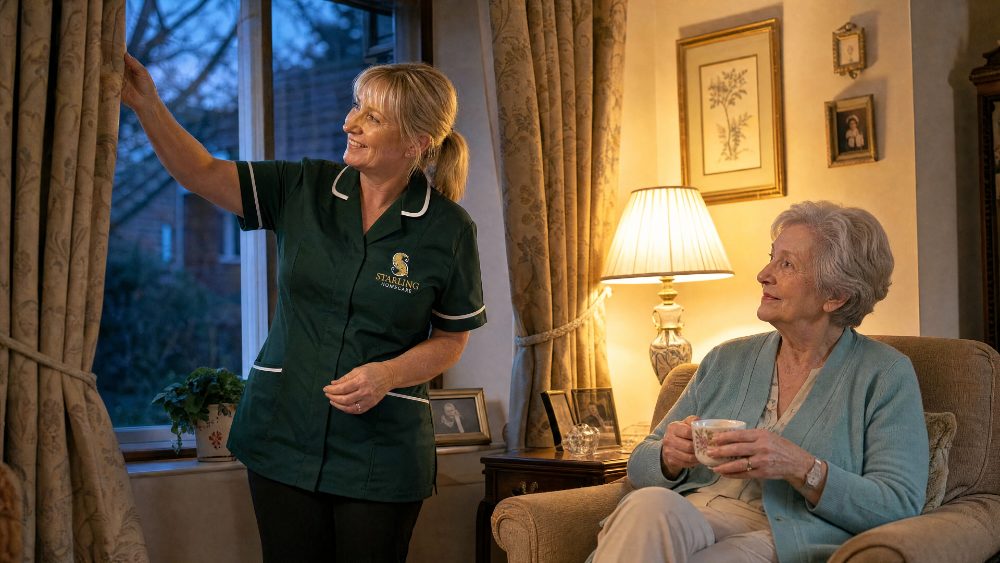
The Alzheimer's Society notes that uneven light and reflective surfaces can cause confusion. So draw the curtains and switch on the lamps once it starts to get dark. In the same way, a cloth over a switched off television stops it becoming a dark mirror.
Let the clocks do the work
Radio controlled clocks update themselves, so there is nothing to reset next spring. Day and night clocks show a simple symbol for each. They can also help someone tell morning from evening.
What if your parent is distressed in the evening?
First, treat the distress as a message. The Alzheimer's Society suggests checking for an unmet need, such as the toilet, hunger or pain. Then think back over the day, because something earlier may have upset them.
The charity also suggests gentle distraction, for example talking about a favourite memory or an event they enjoy thinking about.
If a new evening pattern appears suddenly, mention it to their GP or pharmacist. Pain and medicine side effects are both on the charity's list of possible causes. However, never stop or change a medicine yourself; that decision belongs to the prescriber.
How dementia care at home from Starling Homecare fits the evenings
A teatime visit can cover the late afternoon: curtains closed, lamps on, a meal, a drink and some calm company. Then a later visit can follow the same bedtime routine every night.
Read more about our dementia and Alzheimer's care at home and helping someone with dementia stay safe at home in St Albans.
Where nights are broken too, overnight care or live-in care may be worth discussing.
Frequently asked questions
Does Starling Homecare provide evening dementia care in St Albans?
Yes. We provide visiting dementia care in St Albans, including teatime and bedtime visits. Visits can follow the same steps in the same order each evening, which often helps the evening settle.
Does sundowning mean the dementia is getting worse?
Not necessarily. The Alzheimer's Society says sundowning can appear at any stage, though it is more common later on. Because the causes are not well understood, it is worth telling the GP or memory service what you are seeing and when.
Should bedtime move now the clocks have changed?
Generally, keep to the usual clock times for meals and bed, so the routine stays the same. The aim now is a calm routine through the weeks of early dusk.
Do all the clocks in the house need changing?
Yes, any that do not update themselves, so every clock in the house shows the same time. Radio controlled clocks change on their own, which helps again when the clocks go forward on 28 March 2027.
Shorter days need not mean harder evenings all winter. If a second pair of hands at teatime would help, our St Albans team can talk through what might suit the household. You can also find us on our home care in St Albans page.
Figures and guidance checked on 25 October 2026 against GOV.UK: When do the clocks change? and Alzheimer's Society: supporting people with dementia when the clocks change.
Arranging Care Is Simple
Starting care can feel like a big step. We keep it calm and straightforward, and we are here to guide you from your very first call.
1. Talk to us
Get in touch by phone or request a callback. We will listen, answer your questions and help you understand the options, so you can decide what feels right in your own time.
2. A home visit and initial consultation
We arrange a visit to understand your routines, your home and what matters most to you. Together we agree an initial consultation and shape the support that feels right.
3. Your care begins
A small, familiar team starts your care, arriving at the agreed times and staying involved as your needs change. We remain your trusted adviser throughout.
Whenever you are ready, we are here to help.