
Visiting Care at Home

Hourly home care, shaped around your day
Visiting care is regulated home care delivered in visits, from 30 minutes to several hours, at the times of day you need them. It is the most common way families arrange support, and it is the foundation of almost everything we do. We provide visiting care across St Albans, Harpenden, Hemel Hempstead, Welwyn Hatfield, Potters Bar (including Cuffley) and Cheshunt, seven days a week from 7am to 10pm, with a small, familiar team who arrive when they say they will and do what was agreed. It can be a single visit a week or several visits a day, and it can change as your needs do.
Written by the Starling Homecare leadership team and reviewed by Rupen Faldu, Managing Director and the provider’s nominated individual. Fees and service terms on this page are taken from our 2026 fee sheet and Terms of Business. Last reviewed 24 October 2026; next review by April 2027. Sources are listed at the end of this page.
Why Visiting Care Works
Most people do not need someone with them all day. They need the right help at the right moments: getting up and dressed, a hot meal, medication on time, a wash before bed, company on a long afternoon. Visiting care puts a carer in your home for exactly those moments and leaves the rest of the day yours. For many families it is the step that keeps someone at home for years.

Visits Built Around Your Routine
Before care begins we spend time understanding your day: when you wake, when you eat, what you find difficult, what you want to keep doing yourself and when a visit would actually help. From that we agree a pattern of visits, each with a clear purpose, and we write it into your care plan. A morning visit might cover washing, dressing, breakfast and medication. A lunchtime visit might be a meal and a check-in. An evening visit might be supper, medication and settling for the night. Visits can be 30 minutes, 45 minutes, an hour or longer, and the pattern can be changed whenever life changes.
The Same Faces, at the Agreed Times
Visiting care only works if the carer turns up, on time, and knows what to do. We keep each person’s team deliberately small so you see the same faces, we plan rounds realistically so visits are not squeezed, and we tell you promptly if anything changes. Every visit is recorded on our digital care system, and family members with your permission can see the notes from their own phone, so nobody has to wonder whether Mum has had her lunch.

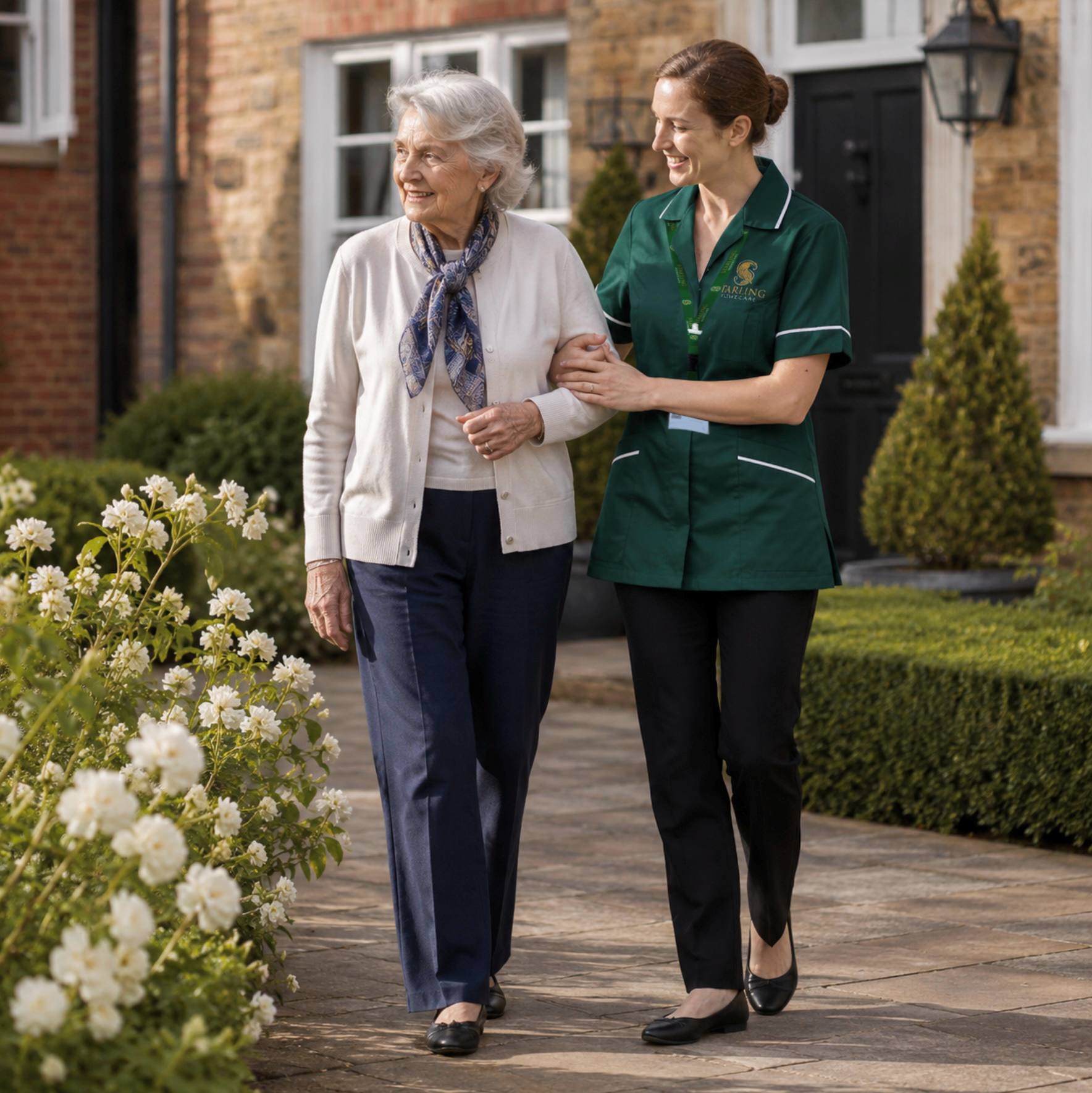
Visiting Care May Include:
- Help with washing, dressing, toileting and personal care
- Preparing meals and drinks, and making sure they are eaten
- Medication prompting and support at the right times
- Light housekeeping, laundry and shopping
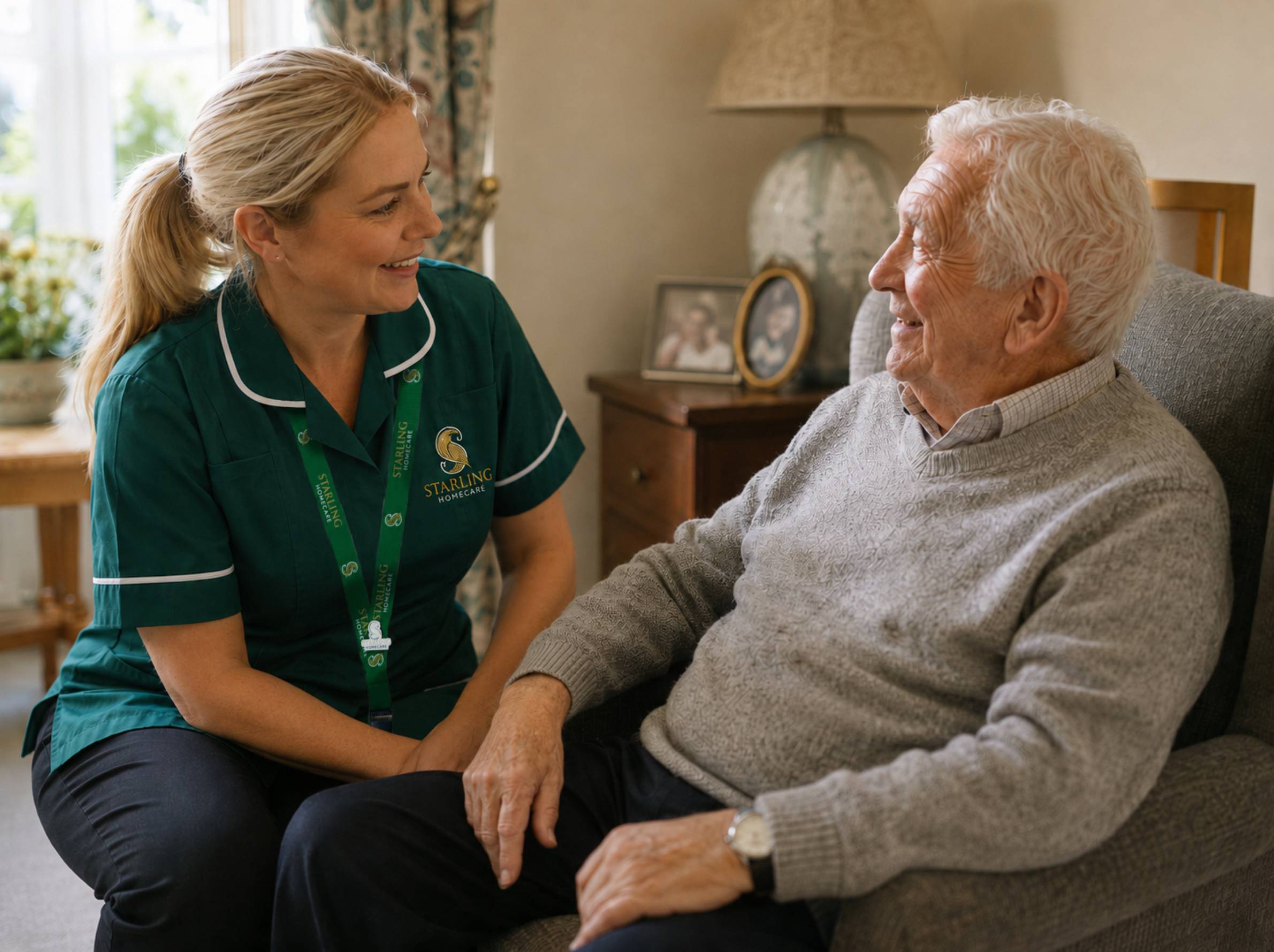
- Companionship, conversation and help to keep up interests
- Accompanying you to appointments and trips out
- A check on wellbeing and safety at each visit, with concerns passed on quickly
- Respite visits that give family carers a regular break
Support That Grows With You
When help is occasional
One or two visits a week, perhaps for a shower, a bit of housekeeping, a shopping trip or simply company, as a gentle start that gets you used to having someone in the home.
When help is regular
Daily visits at the points in the day that matter, often morning and evening, sometimes lunchtime too, with the same small team each time.
When needs are greater
Longer visits, several visits a day, overnight care, or a move to live-in care, planned with you and your family as needs change.
Visiting care alongside specific conditions
Visiting care is the way most of our condition-specific support is delivered. If you are arranging care for someone living with dementia, recovering after a hospital stay, or living with a condition such as Parkinson’s, those pages explain what the visits look like in practice.
If you are arranging visiting care on someone else’s behalf as a case manager, deputy or solicitor, our page for case managers, deputies and solicitors covers our registration, reporting and referral route.
Arranging Visiting Care: Your Questions
How much does visiting care cost?
Visits start from 30 minutes, from £34, with no hidden fees. Longer visits cost more and weekend visits are a little higher. Every family receives a written quote before anything begins, and regulated home care is VAT exempt.
How short can a visit be?
Our shortest visit is 30 minutes, which is enough for a focused task such as medication, a meal or help getting ready for bed. We do not offer 15-minute visits, because in our experience they do not allow care to be done properly or with dignity.
What times of day can carers visit?
Visiting care runs seven days a week from 7am to 10pm. Overnight care is available from 10pm to 7am as a separate service, and live-in care is available where someone needs support around the clock.
Will the same carer come every time?
As far as we can arrange it, yes. Each person has a small team, so you see familiar faces and nobody has to be shown where things are twice. When a regular carer is on leave, cover comes from within that team wherever possible.
Can I change the number or timing of visits?
Yes. Visits can go up or down, change time or stop altogether as your needs change. Many families start with one or two visits a week and build from there, and some step support back after a period of recovery.
What happens if a carer is running late?
You will hear from us. We plan rounds with realistic travel time, and if something unavoidable happens on the road, the office contacts you so you are not left wondering.
How quickly can visiting care start?
Care can often be in place within a couple of working days, depending on availability and on matching you with a suitable carer. We will give you a realistic timescale when you contact us.
Do we have to commit long term?
No. There are no long-term or fixed-term contracts, and every package carries our 90-day risk-free guarantee: you can cancel at any time.
Visiting Care in Hertfordshire
What is the difference between visiting care and live-in care?
Visiting care means a carer comes to you for set visits and leaves afterwards. Live-in care means a carer lives in your home and is available throughout the day. Visiting care suits most people; live-in care suits someone who needs support around the clock or who would be unsafe alone. Our live-in care page explains more.
Which areas do you cover for visiting care?
We provide visiting care in St Albans, Harpenden, Hemel Hempstead, Welwyn Hatfield, Potters Bar (including Cuffley) and Cheshunt, and the villages around them. Live-in care is available across the whole of Hertfordshire.
Is visiting care regulated?
Yes. Starling Homecare is registered with the Care Quality Commission, which means our carers are vetted, trained and supervised, every visit is recorded, and the service is open to inspection. Our guide to private carers versus regulated home care explains why that matters.
Can family see what happened at each visit?
Yes, with the person’s permission. Visit notes are recorded digitally and family members with authority can see them through an app, so relatives who live further away stay informed without having to call.
Living Well With Visiting Care
Can visiting care include taking someone out?
Yes. Appointments, shopping, a walk, church or a club can all be part of a visit, and getting out regularly often does more for wellbeing than anything that happens indoors.
How is visiting care funded?
Many families fund care privately. Council support may be available following a care needs assessment and a financial assessment from Hertfordshire County Council, and Direct Payments can be used to pay for care where someone is eligible. Attendance Allowance may also apply for people over State Pension age. Our care funding guide sets out the options.
What if my parent says they do not want carers?
This is very common, and a gentle start usually works best: one or two visits a week framed as help around the house or a bit of company, with the same carer each time. Most people come to look forward to the visits once they know the person. We are happy to talk through how to introduce the idea.
What will the carer know before the first visit?
We write the care plan with you before care starts. It records your routine, what each visit is for, how you like things done and anything carers need to know about the home. The carers who visit work from that plan.
How to Get Started
- Think about what type of help would make life easier
- Check if you or your loved one might be eligible for support
- Speak with us. We can guide you through options and next steps
Arranging Visiting Care Is Simple
Starting care can feel like a big step. We keep it calm and straightforward, and we are here from your very first call to help you explore what might feel right, whether that is with us or simply pointing you in the right direction.
1. Talk to us
Get in touch by phone or request a callback. We will listen, answer your questions and help you understand the options, so you can decide in your own time.
2. A home visit and initial consultation
We arrange a visit to understand your routines, your home and what matters most to you. Together we agree an initial consultation and shape the support that feels right.
3. Your care begins
A small, familiar team starts your care, arriving at the agreed times and staying involved as your needs change. We remain your trusted adviser throughout.
Whenever you are ready, we are here to help.

Visiting care is the quiet, practical help that keeps people at home. The right visits at the right times, from people you know, change what is possible. If you are exploring visiting care, we are here to talk it through. Call us or complete our enquiry form. We would be glad to help.
Information on this page was checked on 24 October 2026. For independent information on arranging care at home, Age UK is a good place to start.
Related reading on visiting care
- Personal Care
- Companionship Care
- Overnight Care
- How Care Starts
- Home Care or a Care Home?
- What Happens in a Home Care Visit
Sources
- Health and Social Care Act 2008 (Regulated Activities) Regulations 2014, legislation.gov.uk, accessed 24 October 2026.
- The fundamental standards, Care Quality Commission, accessed 24 October 2026.
- Minimum Price for Homecare 2026 to 2027, Homecare Association, accessed 24 October 2026.
- Paying for your care costs, Hertfordshire County Council, accessed 24 October 2026.
- Registration evidence for the statements about Starling Homecare on this page: our CQC registration record, accessed 24 October 2026.