
Physical Disability Care at Home
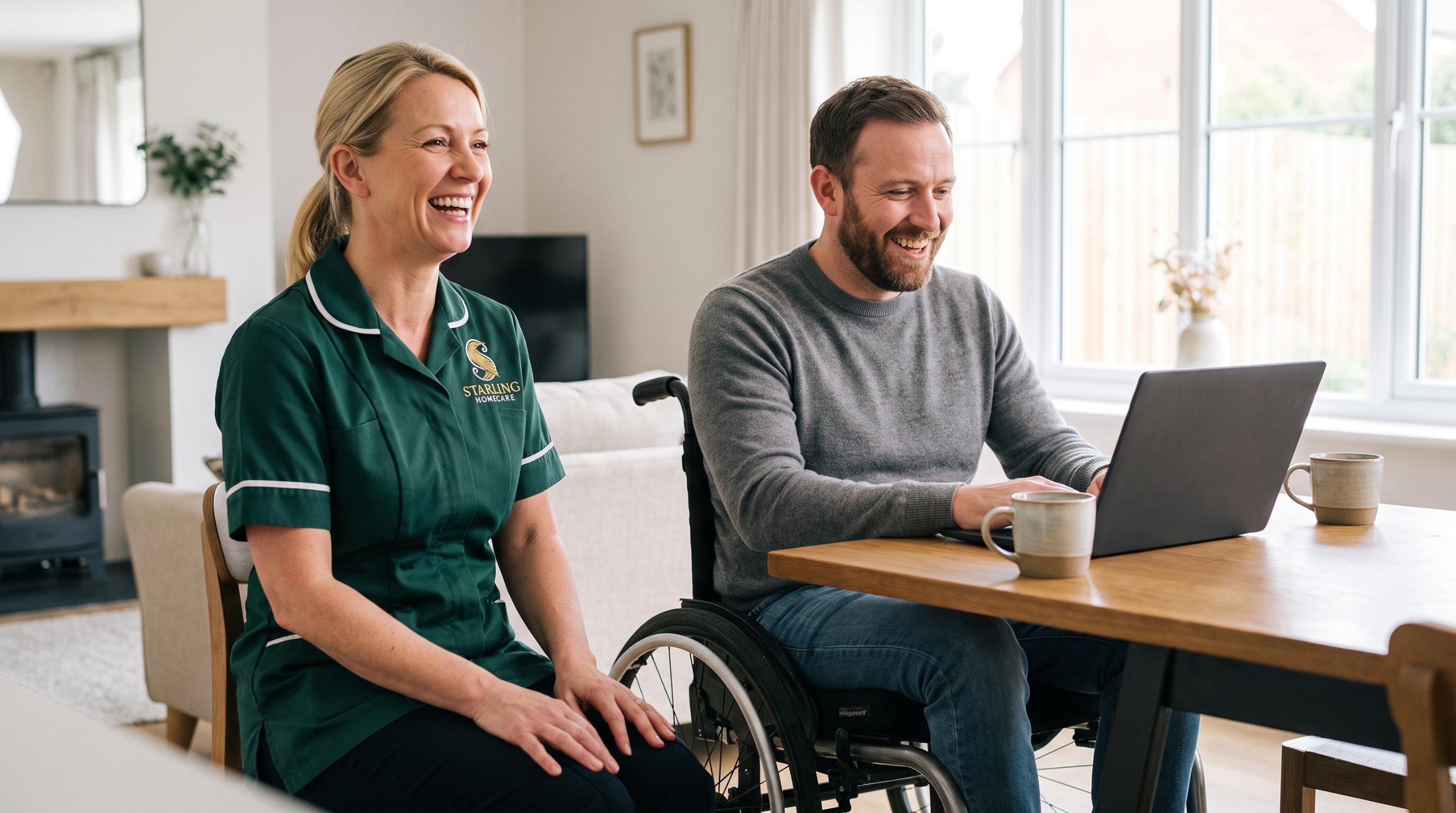
Support that fits around your life, not the other way round
If you or someone in your family is living with a physical disability, whether lifelong, following an accident or illness, or developing in later life, we can arrange regulated physical disability care at home across St Albans, Harpenden, Welwyn Hatfield, Hemel Hempstead and Potters Bar, with live-in care available across the whole of Hertfordshire. Our starting point is that you are the expert in your own needs. Carers are there to make the things you cannot easily do yourself happen reliably, on time and in the way you want, so your energy goes into your life rather than into managing it.
Why Home Matters with a Physical Disability
Your home has usually been set up around you: the equipment, the adaptations, the layout, the routines. It is the place where you have the most control and the most independence. Care at home keeps that intact and adds support only where you want it, from a small team who learn your way of doing things and stick to it.

Care Built Around Your Routine and Your Equipment
No two physical disabilities look the same, and no two people want the same help. Some people need support for a short window in the morning and evening and nothing in between. Some need help throughout the day. Before care begins we understand your condition, your routine, the equipment and adaptations you use, how you prefer to be assisted and what you want to keep doing yourself. The care plan records it in detail so every carer works the same way, whether that is how you like a hoist sling positioned, how you transfer, or the order you want things done in.
Reliability Is the Service
For someone with a physical disability, a late carer is not an inconvenience. It can mean not getting up, not getting to work, or missing a medication window. We take timekeeping seriously, keep the team small so your routine is understood, and tell you promptly if anything changes. We also work with your occupational therapist, physiotherapist and district nursing team, with your consent, so care at home supports the plan they have set rather than working against it.

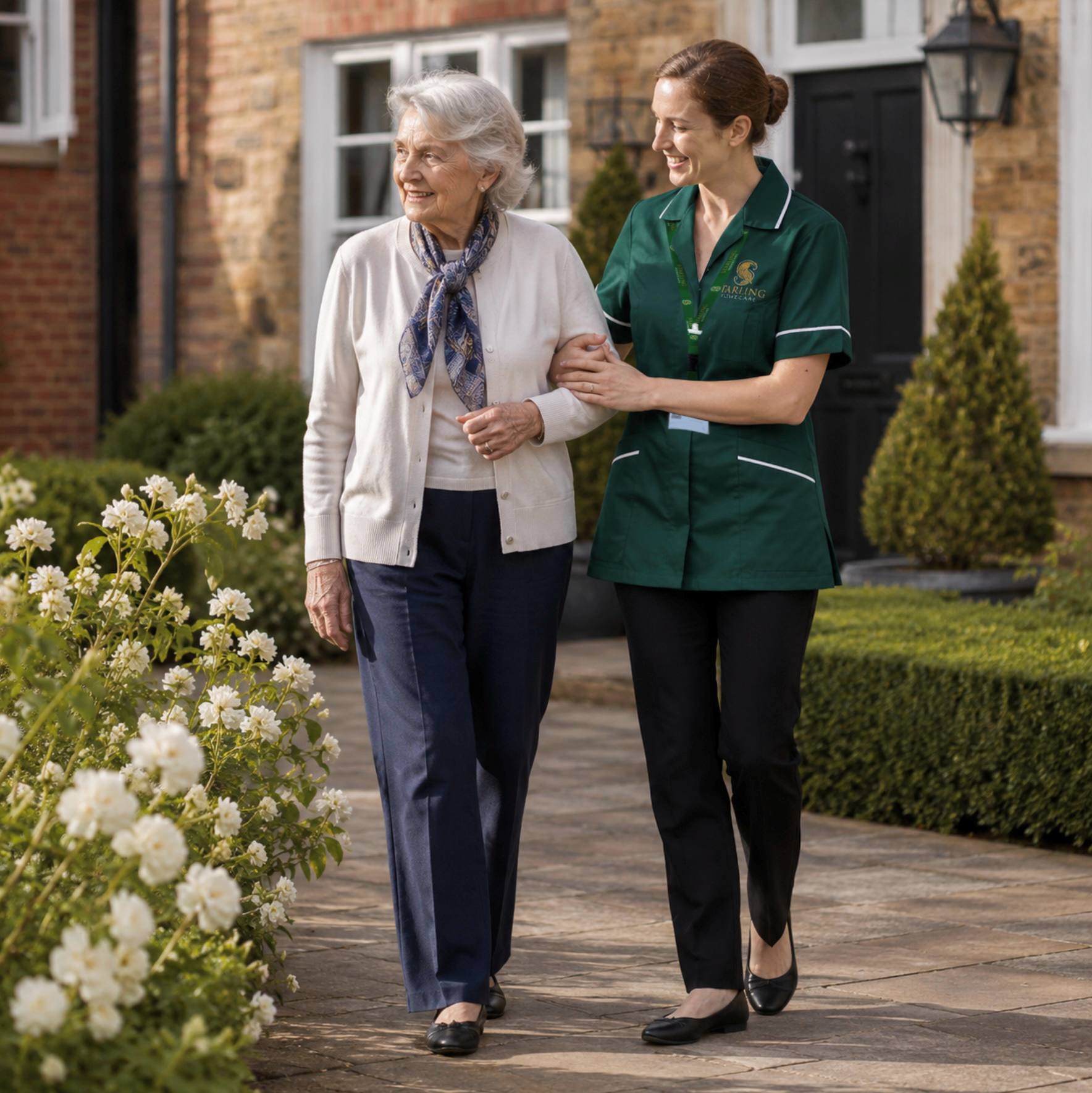
Physical Disability Care May Include:
- Personal care in the morning and evening, done your way and at your pace
- Help with transfers and moving around the home using your own equipment and your agreed method
- Support with medication, continence care and skin care as agreed in your plan
- Meal preparation, housekeeping and everyday practical support
- Help to get out: to work, study, appointments, shopping and social life
- Support with exercises and routines set by your physiotherapist or OT
- Respite visits that give family carers a proper break
- Longer visits, overnight support or full live-in care where needs are greater
Support That Fits the Level of Need
When help is occasional
Short visits at the points in the day where support makes the difference, such as getting up, getting ready for bed, or a meal, with everything else left to you.
When help is regular
Daily or twice-daily visits shaped around your routine, with the same small team who know your equipment, your transfers and your preferences.
When needs are greater
Longer visits, overnight support or full live-in care, planned with you and your family and, with your consent, alongside the professionals already involved.
Working alongside the NHS and specialist services
Diagnosis, treatment, equipment and adaptations sit with your GP, consultants, occupational therapy, physiotherapy and district nursing. We do not employ nurses and we do not provide nursing care. Our role is the day-to-day personal and practical care at home that lets the clinical plan work, including tasks such as catheter and stoma bag care once a nurse has signed carers off for them. Where a condition has its own page, such as MS care, stroke care or brain injury care, it explains the detail for that condition.
If you are arranging physical disability care on someone else’s behalf as a case manager, deputy or solicitor, our page for case managers, deputies and solicitors covers our registration, reporting and referral route.
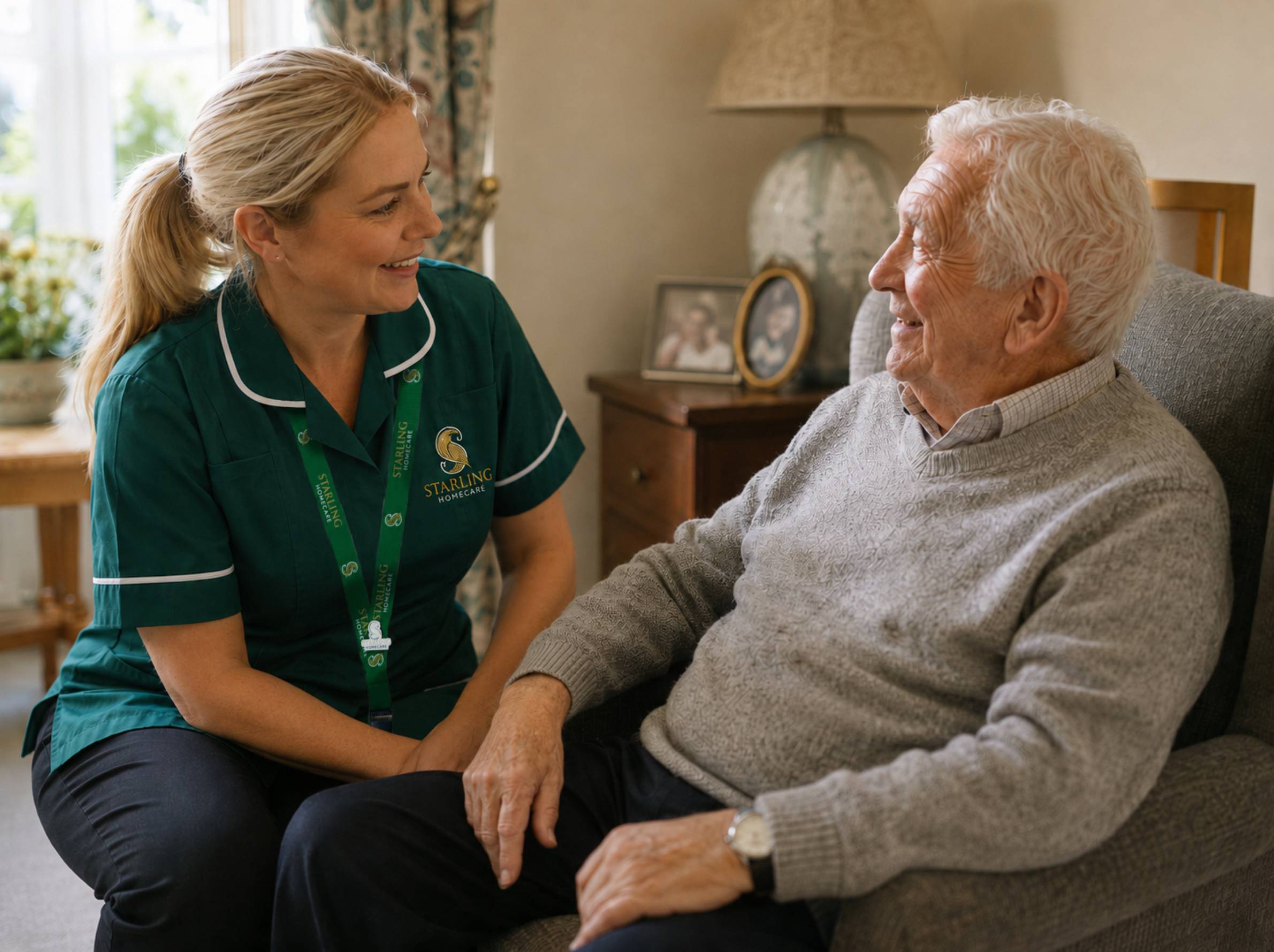
Arranging Physical Disability Care at Home: Your Questions
How much does physical disability care at home cost?
Care visits start from 30 minutes, from £34, with no hidden fees, and every family receives a written quote before anything begins. Regulated home care is VAT exempt.
Can you support younger adults, not just older people?
Yes. We support adults of all ages, including people of working age with a physical disability. Care is planned around work, study, family and social life, not around an older person’s template.
Do your carers use hoists and other moving equipment?
Yes, where the equipment is in place and the method has been assessed. Carers are trained in moving and handling and follow the transfer method recorded in your plan, using your own hoist, slings, slide sheets or stand aid. Where a task needs two carers, we plan for two.
Can I direct my own care?
Yes, and we expect you to. You tell us how you want things done, in what order and at what pace, and that becomes the plan. If you manage your care through a Direct Payment or a personal health budget, we are used to working that way.
Will visits be on time?
Timekeeping is treated as part of the care, because for many people with a physical disability it decides whether the day starts at all. We keep the team small, plan rounds realistically and tell you promptly if anything changes.
Can you help me get to work, college or out socially?
Yes. Carers can support you to get ready, travel with you where that is agreed, and help at the other end. Support at home should make it easier to have a life outside it.
How quickly can physical disability care start?
The right timing depends on your situation and on matching you with suitable carers, particularly where two carers or specific training are needed. We will talk through your needs and explain realistic timescales when you contact us.
Do we have to commit long term?
No. There are no long-term or fixed-term contracts, and every package carries our 90-day risk-free guarantee: you can cancel at any time.
Physical Disability and Support in Hertfordshire
What conditions does physical disability care cover?
Anything that affects movement, strength, balance or the use of your body: for example spinal injury, cerebral palsy, multiple sclerosis, muscular dystrophy, the effects of a stroke, severe arthritis, amputation or a long-term injury. Physical disability is one of the groups of people our Care Quality Commission registration covers.
Do you cover the whole of Hertfordshire for physical disability care?
In practice, we arrange visiting care at home in St Albans, Harpenden, Welwyn Hatfield, Hemel Hempstead and Potters Bar, and the villages around them. In addition, live-in care is available across the whole of Hertfordshire.
Can you work with my occupational therapist, physiotherapist or district nurse?
Yes, with your agreement. We follow the moving and handling plan, exercise programme and any delegated tasks they set, and we tell them promptly if something changes at home. We do not provide nursing care ourselves.
Can you support someone funded through the council or the NHS?
Yes. We support people who fund care privately, through Direct Payments from Hertfordshire County Council, through a personal health budget, or through NHS Continuing Healthcare where eligible. Our Direct Payments guide explains how that works locally.
Living With a Physical Disability at Home
Can someone with a significant physical disability live independently with care at home?
Yes. With the right equipment, adaptations and a reliable care package at the right points in the day, many people with significant disabilities live full, independent lives at home. Live-in care is also an option where support is needed around the clock.
How is physical disability care at home funded?
Some families fund care privately. Council support may be available following a care needs assessment and a financial assessment from Hertfordshire County Council, and Direct Payments can be used to pay for care where someone is eligible. NHS Continuing Healthcare may apply where there is a primary health need. Our care funding guide sets out the options.
Can you provide two carers for a visit?
Yes, where a moving and handling assessment calls for it. Double-handed visits are planned and staffed as a pair, so both carers arrive together and know the routine.
What will the carers know about me before the first visit?
We write the care plan with you before care starts. It records your condition, your routine, your equipment and transfer method, how you want to be assisted and what you do yourself. The carers who visit work from that plan, so you should not have to explain it again.
How to Get Started
- Think about what type of help would make life easier
- Check if you or your loved one might be eligible for support
- Speak with us. We can guide you through options and next steps
Arranging Physical Disability Care Is Simple
Starting care can feel like a big step. We keep it calm and straightforward, and we are here from your very first call to help you explore what might feel right, whether that is with us or simply pointing you in the right direction.
1. Talk to us
Get in touch by phone or request a callback. We will listen, answer your questions and help you understand the options, so you can decide in your own time.
2. A home visit and initial consultation
We arrange a visit to understand your routines, your home and what matters most to you. Together we agree an initial consultation and shape the support that feels right.
3. Your care begins
A small, familiar team starts your care, arriving at the agreed times and staying involved as your needs change. We remain your trusted adviser throughout.
Whenever you are ready, we are here to help.

The right care at home for a physical disability is reliable, consistent and done your way. It should give you more of your life back, not take more of it up. If you are exploring physical disability care, we are here to talk it through. Call us or complete our enquiry form. We would be glad to help.
Information on this page was checked on 24 October 2026. For the latest information and support on living with a disability, Scope is a good place to start.