
Keeping warm in winter matters more as we get older, and a few simple habits make a real difference: a heated home, warm layers, hot food and drinks, regular movement and someone checking in. For families in Hertfordshire, the start of the cold-health alert season on 1 November is a good moment to put those habits in place for an older parent.
Why is this a good time to plan?
The UK Health Security Agency (UKHSA) runs a Cold-Health Alerting system in partnership with the Met Office. According to the GOV.UK guidance on the weather-health alerting system, the core alerting season for cold-health alerts runs from 1 November to 31 March. Alerts can still be issued outside that period if the criteria are met.
Alerts are sent by email to everyone who has registered to receive them, using the form linked from that GOV.UK page. The page is aimed mainly at health, social care and community organisations, but it invites people to share the registration link with anyone who should be receiving the alerts. For a son or daughter who lives some distance from a parent in, say, Harpenden or Hitchin, an email warning of a cold spell is a useful prompt to pick up the phone.
The NHS lists people aged 65 and older among those most at risk from cold weather. It also names people with a long-term health condition, people with a disability and people on a low income.
How warm should the house be?
The NHS advises heating your home to a temperature that is comfortable for you. If you can, it says the rooms you regularly use should be at least 18°C. Age UK gives similar guidance, suggesting a steady, comfortable temperature through the day, with around 18°C usually ideal.
Age UK's other home tips are simple to put in place on a visit:
- Turn off radiators in rooms that are not used, and keep those doors closed.
- Close curtains in the evening and keep windows shut to block draughts.
- Open curtains during the day to let warmth in.
- Put rugs down on wood or laminate floors.
A room thermometer in the sitting room shows the temperature at a glance.
Keeping warm in winter: clothing, food and movement
Age UK notes that several thin layers keep you warmer than one thick layer. Jumpers, hats, scarves and blankets all help, and it is worth taking extra layers when going out, as the temperature can drop sharply once the sun goes down. At night, warm nightwear, thick socks and slippers help, and Age UK reminds people never to use a hot water bottle with an electric blanket.
Food matters too. Age UK suggests at least one hot meal a day and as many hot drinks as you can, with soups, stews and tea all helping to keep warm. Families we support often tell us that a parent who lives alone can lose interest in cooking during the darker months, so a regular hot lunch can be one of the most useful things to arrange.
Moving a little and often also helps. Age UK suggests trying not to sit still for more than an hour at a time, and says chair-based exercises are an option if walking is difficult. Even moving arms and legs and wiggling toes can help. Our guide to preventing falls at home covers staying active and making the home safer, which matters more when paths outside are icy.
Checking in during a cold spell
The NHS encourages people to keep in touch with friends, neighbours and family and ask whether they need practical help. It also suggests making sure people have food supplies for a few days. Age UK adds that it is worth keeping an eye on the forecast, as bad weather can make it harder to leave the house.
A simple plan agreed before November can save a lot of worry later:
- Who calls each day when an alert is in place, and at what time.
- Which neighbour could help clear a path or pick up shopping.
- Where a spare key is kept, and who has it.
- A small stock of tins, long-life milk and easy meals in the cupboard.
For anything about health, such as a parent feeling unwell in the cold, the right route is their GP or NHS 111.
Help with energy bills and local advice
Cold Weather Payments are separate from the Winter Fuel Payment. The GOV.UK Cold Weather Payment page says people may qualify if they receive certain benefits or Support for Mortgage Interest. Payments are £25 for each 7-day period of very cold weather between 1 November 2026 and 31 March 2027.
A payment is made when the average temperature in your area is recorded or forecast to be at or below zero degrees Celsius over 7 consecutive days. Eligible people receive it automatically and do not need to apply. For the Winter Fuel Payment itself, see our article on the Winter Fuel Payment in Hertfordshire.
For local support, HertsHelp is a Hertfordshire service that helps people find independent support, guidance and information. Its phone line is 0300 123 4044, open 9am to 5pm on Monday, Tuesday, Thursday and Friday, 9am to 7pm on Wednesday, and 10am to 4pm at weekends. Nationally, the Age UK Advice Line is free on 0800 678 1602, open 8am to 7pm, 365 days a year, and Age UK's tips for a healthier winter are worth reading together with a parent.
How visiting care helps through the winter
Many families cannot cover every cold day themselves, and visiting care can make keeping warm in winter easier for everyone.
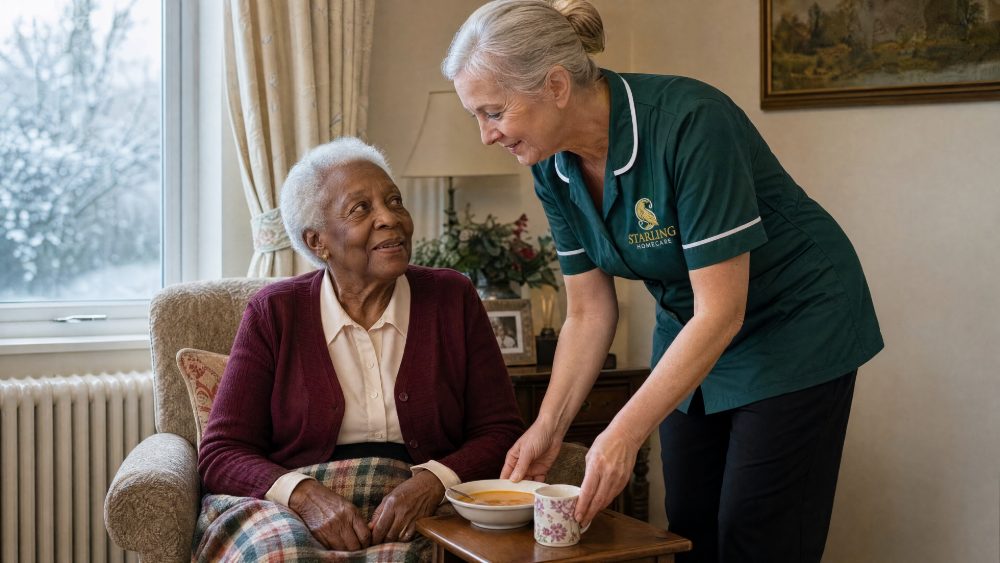
On a winter visit, our carers check that the heating is on and the rooms in use feel warm. They prepare a hot meal and drinks, help with getting dressed in warm layers, and encourage a little movement. Each visit is also a daily check, so the family hears promptly if anything seems different.
Our later life care is built around familiar carers, consistent visit times and a care plan agreed with the family. Visiting care is from £34 an hour, and live-in care is from £255 a day. These are starting rates, and a price is agreed after an assessment.
Our local team is based at our head office in St Albans and supports families across the county, from Harpenden to Hertford. You can reach us on 01727 324 127 or at [email protected], and you can see the towns we visit on our areas we cover page.
Common questions about keeping warm in winter in Hertfordshire
What room temperature does the NHS recommend for older people?
The NHS says to heat your home to a temperature that feels comfortable. Where possible, rooms used regularly should be at least 18°C. Age UK also gives around 18°C as usually ideal.
When does the cold-health alert season start?
UKHSA's core alerting season for cold-health alerts runs from 1 November to 31 March each year. Alerts can be issued outside those dates if the criteria are met. Registration for email alerts is through the form linked from the GOV.UK weather-health alerting page.
Does my parent need to apply for a Cold Weather Payment?
No. GOV.UK says eligible people receive Cold Weather Payments automatically. Eligibility depends on receiving certain benefits or Support for Mortgage Interest, and a payment is triggered by 7 consecutive days at or below zero degrees Celsius on average.
Where can we get local advice in Hertfordshire?
HertsHelp can point families towards independent support and information on 0300 123 4044, or by email at [email protected]. Age UK's free Advice Line on 0800 678 1602 is another option, open every day of the year.
Winter in Hertfordshire can be long, but most of what keeps an older parent warm and well is simple and steady: a warm room, good food, a little movement and someone who checks in. A plan agreed now, before the first cold snap, means everyone knows their part when the weather turns.
Details checked against UKHSA, GOV.UK, NHS, Age UK and HertsHelp pages on 12 October 2026. Our prices are starting rates, checked on the same date.
Arranging Care Is Simple
Starting care can feel like a big step. We keep it calm and straightforward, and we are here to guide you from your very first call.
1. Talk to us
Get in touch by phone or request a callback. We will listen, answer your questions and help you understand the options, so you can decide what feels right in your own time.
2. A home visit and initial consultation
We arrange a visit to understand your routines, your home and what matters most to you. Together we agree an initial consultation and shape the support that feels right.
3. Your care begins
A small, familiar team starts your care, arriving at the agreed times and staying involved as your needs change. We remain your trusted adviser throughout.
Whenever you are ready, we are here to help.