
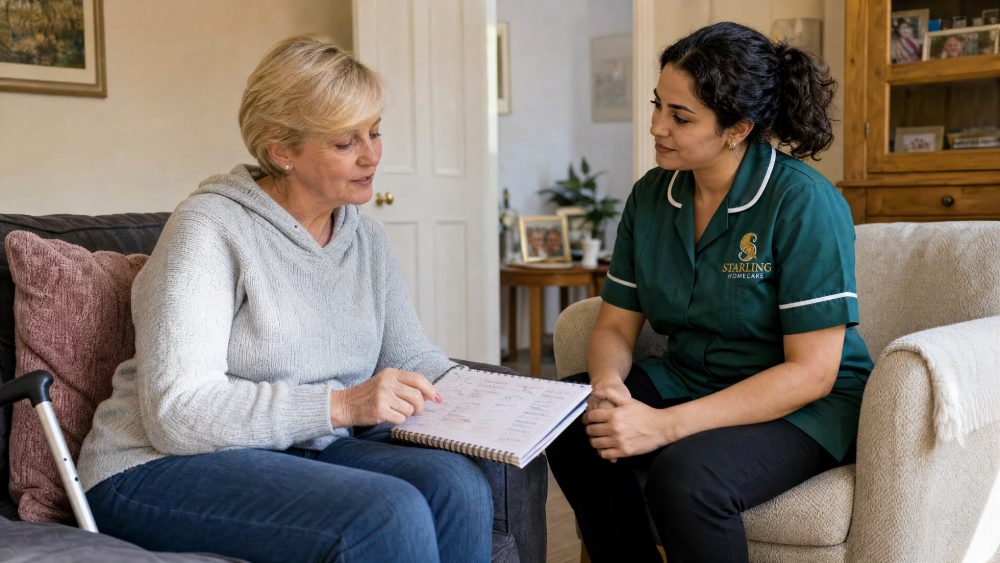
Coming home from hospital with FND goes best when the plan is clear before anyone leaves the ward. Ask who to contact, what the team has recommended and which appointments come next, then set up the home and the first few weeks around that plan.
Functional neurological disorder can make the return home feel uncertain. FND Hope International describes FND as "a problem with the functioning of the nervous system", and notes that symptoms "typically wax and wane". That is why a little planning for both good days and harder days makes such a difference.
What should you ask before leaving hospital?
The NHS says hospital staff should plan with you when you are ready to leave and where you will go. Family and carers can be part of those discussions if the person wants them to be. It is worth having a notebook ready, because a lot of information arrives at once.
Before discharge, these questions tend to help:
- Who do we contact? Ask for a named person or team, and a number, for questions once you are home.
- What is the plan? Ask the team to write down what they have recommended, including any routines or exercises given by therapists.
- What comes next? Check follow-up appointments and any therapy referrals, and who will send the letters.
- What goes home with us? The NHS says staff should check you have any medicines or equipment you need, and explain how to use them.
The NHS also says staff should share care information with the GP and make sure you know the next steps. You should have a chance to raise any worries about going home. If something is unclear, ask again before you leave.
Is there support after a hospital stay?
Some people are offered intermediate care, which the NHS also calls rehabilitation, reablement and recovery services. According to the NHS guide to planning to leave hospital, you will have a needs assessment to see whether it is right for you. This care is free, and it is provided for as long as you need it, usually for a maximum of 6 weeks.
Whether it is offered depends on that assessment, so ask the ward team directly. If it is offered, find out who will be visiting and when. Any private care you arrange can then fit around it rather than overlap.
Setting up the home for good days and bad days
Because symptoms can change, the home works best when it suits both kinds of day. Keep everyday things within easy reach, and make sure a phone and a drink are always close by. A clear route between bedroom, bathroom and kitchen helps everyone.
Think about the harder days in advance, while things feel calm. Agree a simple plan: who to ring, which jobs can wait, and what a gentle day looks like. Writing it down means nobody has to make decisions under pressure.
If the hospital team suggested equipment or adaptations, follow their advice and ask them who arranges it. We do not assess for equipment, but our carers can help keep the home tidy and safe day to day.
Keeping to the routines the therapy team recommended
When someone comes home from hospital with FND, the therapy team may have suggested routines, pacing or activities. These belong to them, and the best thing families can do is follow that plan as written. We do not provide therapy, and our carers do not change or add to what therapists have advised.
What carers can do is help the day run in a way that makes the plan easier to keep. That might mean a steady morning routine, meals at regular times, or a reminder that it is time for something the team suggested. If anything seems to be getting harder, contact the named team, the GP or NHS 111.
Pacing the first weeks at home
The first weeks after an admission can be tiring for everyone. Many families find it helps to spread tasks across the week, rather than packing the first few days with visitors and errands. Short, predictable routines often feel more manageable than busy ones.
Keep a simple diary of appointments, letters and questions for the team. It saves time at follow-up appointments and stops details slipping. Take it with you, along with any written plan from the hospital.
Looking after yourself as a family carer
Supporting someone home from hospital with FND is a lot to carry, alongside work and family life. The NHS says a regular unpaid carer is entitled to a carer's assessment, to see what support might help them.
Accepting help early is not the same as giving up. Sharing the load can protect your own health and keep your relationship as family, not only as carer. You can read more in our guide to supporting someone with FND at home.
How visiting or live-in care can bridge the first weeks
Care at home can fill the gap between leaving hospital and settling into a new routine. Visiting care suits people who need help at certain times, such as mornings, meals or evenings. Live-in care suits those who would feel safer with someone in the home day and night.
Our support is practical and non-clinical. Carers help with personal care, meals, light housework, company and getting to appointments, and can prompt medication as set out in the care plan. We agree that plan with the person and family, and we aim for familiar carers and consistent visits.
You can read more about our care after a hospital stay, our FND care at home, and FND support in Hertfordshire.
Talking to our Hertfordshire team
Starling Homecare is a family-run provider regulated by the Care Quality Commission, with a local team based at our St Albans head office. We can talk through discharge plans, timings and what the first weeks might look like. Call 01727 324 127 or email [email protected].
Visiting care starts from £34 an hour, and live-in care starts from £255 a day. These are starting rates, and we agree a price with you after an assessment.
Common questions about coming home from hospital with FND in Hertfordshire
Can care start on the day of discharge?
It helps to contact us as soon as a discharge date is likely, even if it may change. We can then plan an assessment and talk through the first visits. Let the ward team know that private care is being arranged too.
Will your carers do the exercises from the therapy team?
No. Therapy is provided by the NHS or other clinical teams, and we follow their plan rather than add to it. Our carers can help the day run smoothly so the recommended routine is easier to keep.
How long does free NHS support after a hospital stay last?
The NHS says intermediate care is free and lasts as long as it is needed, usually up to a maximum of 6 weeks. It depends on a needs assessment, so not everyone will be offered it. Ask the hospital team whether it applies.
What if symptoms change once we are home?
Changes are worth reporting to the contact the hospital gave you, or to the GP. For urgent advice, NHS 111 is available. Our carers will share what they notice with the family, as agreed in the care plan.
Coming home after a stay in hospital is a big step, and nobody needs to work it all out on the first day. A clear plan from the hospital, a calm home and a few trusted people around can make the first weeks feel steadier for everyone.
Details checked against the NHS guide to planning to leave hospital and FND Hope International's FND guide on 12 October 2026. Our prices are starting rates, checked on the same date.
Arranging Care Is Simple
Starting care can feel like a big step. We keep it calm and straightforward, and we are here to guide you from your very first call.
1. Talk to us
Get in touch by phone or request a callback. We will listen, answer your questions and help you understand the options, so you can decide what feels right in your own time.
2. A home visit and initial consultation
We arrange a visit to understand your routines, your home and what matters most to you. Together we agree an initial consultation and shape the support that feels right.
3. Your care begins
A small, familiar team starts your care, arriving at the agreed times and staying involved as your needs change. We remain your trusted adviser throughout.
Whenever you are ready, we are here to help.