
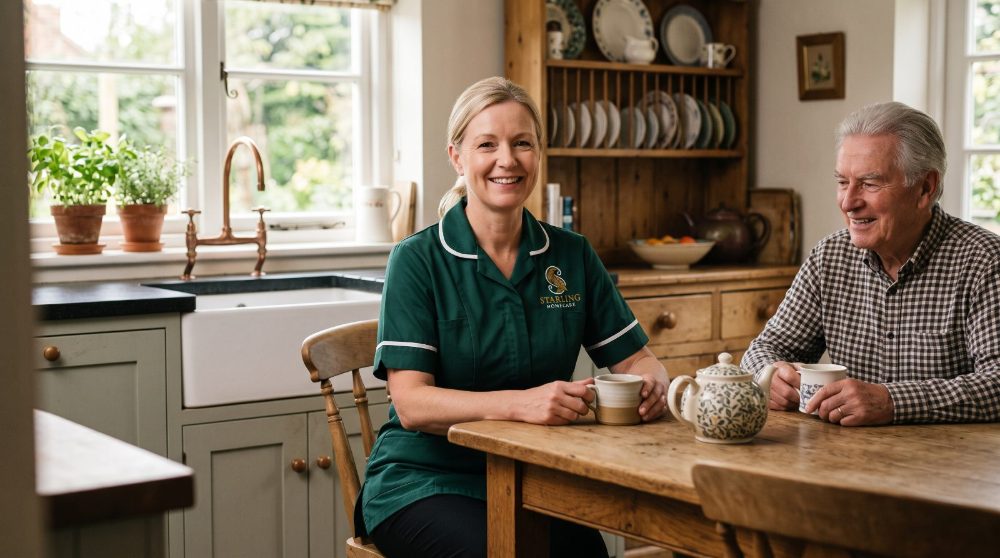
Live-in care in Potters Bar means one carer living in the person's own home. They are there through the day and overnight, so support is continuous rather than dropped in at visit times. Most families understand that part. What they cannot picture is the fortnight when it actually starts.
That is the bit worth planning. Almost everything that goes wrong with a live-in arrangement goes wrong in the first two weeks, and almost all of it is avoidable.
Here is what the first fortnight of live-in care in Potters Bar normally looks like. These are the questions worth settling with any provider before somebody moves in.
What to agree before live-in care in Potters Bar starts
An assessment comes first, at home, with the person there. It covers the practical routine. When they get up, what they eat, which medicines and when. How they manage stairs and washing, and what a good day looks like.
That becomes a written care plan. Ask to see it before the placement starts. Read it as a description of your relative rather than a form.
Then comes matching, which is the part that decides whether this works. A live-in carer is going to share the house, so temperament matters as much as skills.
You settle the practical details at the same time. The carer's own room, where meals come from and who pays for them. Whether the house has wifi, the household rules about visitors, and how the family wants its updates.
How the rota works, and the questions to ask about it
A live-in carer is not on duty every hour of every day. Any provider that implies otherwise is not being straight with you. Placements run in blocks, with carers changing over, and each carer needs a proper break within the day.
Four things are worth pinning down before you agree anything. How long is each block, and how many different carers will there be across a year. What happens on the changeover day. How long is the daily break, and who covers the person during it. And what the arrangement is at night.
Nights are the one families most often assume. There is a real difference between a carer who sleeps and wakes occasionally, and one who is awake and working. The two cost different amounts.
If your relative is up several times a night, say so at the assessment. It changes the arrangement, and it is far better dealt with before the first night than after it.
Day one and the first night
The carer arrives, usually mid-morning, and the first day is deliberately unambitious. Unpacking, a cup of tea, a walk round the house, and the routine as close to normal as possible.
Where we can, an introduction before the placement starts helps enormously, even for an hour. Meeting somebody as a visitor is much easier than meeting them as the person who has moved in.
The first night is often the hardest, and it is not a verdict on anything. A person who has lived alone for years will notice another set of footsteps.
Family sometimes want to stay for the first night. In our experience it is better to be nearby and reachable. The person and the carer then find their own rhythm, rather than performing for an audience.
Week one: what normally wobbles
Almost every placement has a difficult moment in the first week. Knowing that in advance takes most of the alarm out of it.
The common ones are food, timing and privacy. Meals are cooked slightly differently. The carer wants to help earlier than the person wants helping. Somebody feels watched.
None of that means the match is wrong. It means nobody has learned the routine yet. The fix is usually a specific instruction rather than a change of carer.
Say the small things out loud in week one. Tea at half past six, not seven. He does not like the bathroom door closed. She will refuse help and then accept it if you wait five minutes.
Week two: the test that actually matters
By the end of the second week the arrangement should have gone quiet. That is the test.
Specifically, look for four things. The person is sleeping about as well as before, or better. Meals and medicines are happening without anyone chasing. The carer knows the routine without asking. And the family have stopped ringing daily to check.
If those are true, the placement has landed and the reviews can move to a normal cycle. If they are not, raise it now rather than hoping. A good provider will change a carer without making it awkward, because the alternative is a slow failure over months.
What live-in care costs in Potters Bar
Our live-in care in Potters Bar starts from £255 a day, and from £295 a day for a couple. It is exempt from VAT. We agree the final figure after an assessment, because it depends on what the nights involve and how much support the days need.
Compare that with residential fees rather than with hourly care. The honest comparison is between a care home and a whole household staying as it is. For a couple, live-in care is often the option that keeps two people together at home.
Our guide to what live-in care costs sets out how the price is built up.
Live-in care in Potters Bar and the EN6 villages
We cover the whole of EN6. That is Potters Bar itself, South Mimms, Northaw and Cuffley, along with Brookmans Park and Welham Green to the north.
Families here often arrange care from a distance, frequently from London, which is exactly the situation live-in care suits. Instead of trying to hold a rota of visits together from forty minutes away, there is one person in the house and one point of contact.
Starling Homecare is a family-run provider registered with the Care Quality Commission, with a named care manager for every client. You can read more about how live-in care works, about overnight care and what a night carer actually does, or about our wider home care in Potters Bar.
Common Questions About Live-In Care in Potters Bar
Does a live-in carer need their own room?
Yes. A live-in carer needs a private bedroom with a bed, somewhere to keep their things and somewhere they can be off duty. They do not need a separate bathroom, though it helps, and the room does not need to be large.
What happens when the live-in carer takes their break or goes home?
Cover is arranged, and it should be agreed in writing before the placement starts. Ask how long the daily break is, who is with the person during it, and what happens on the day one carer hands over to another, because that day is where continuity is most often lost.
Is live-in care in Potters Bar an alternative to a care home?
For many people, yes. It provides one-to-one support in a familiar house, which suits someone who would find a move confusing, and it keeps couples together. It is less suitable where somebody needs nursing on site or several staff to move safely, and we will say so plainly if that is where things are heading.
Live-in care in Potters Bar is a bigger change to a household than any other kind of home care. It is worth starting properly. Two weeks of attention at the beginning tends to buy a year of things simply working.
If you would like to talk it through, our Potters Bar team is on 01707 714 000 or [email protected]. We are happy to explain what a placement would look like for your relative before anyone commits to anything. The NHS guide to help at home from a paid carer is a useful neutral overview alongside this.
Our own rates are correct at 9 September 2026 and a final price is agreed after an assessment.
Arranging Care Is Simple
Starting care can feel like a big step. We keep it calm and straightforward, and we are here to guide you from your very first call.
1. Talk to us
Get in touch by phone or request a callback. We will listen, answer your questions and help you understand the options, so you can decide what feels right in your own time.
2. A home visit and initial consultation
We arrange a visit to understand your routines, your home and what matters most to you. Together we agree an initial consultation and shape the support that feels right.
3. Your care begins
A small, familiar team starts your care, arriving at the agreed times and staying involved as your needs change. We remain your trusted adviser throughout.
Whenever you are ready, we are here to help.