
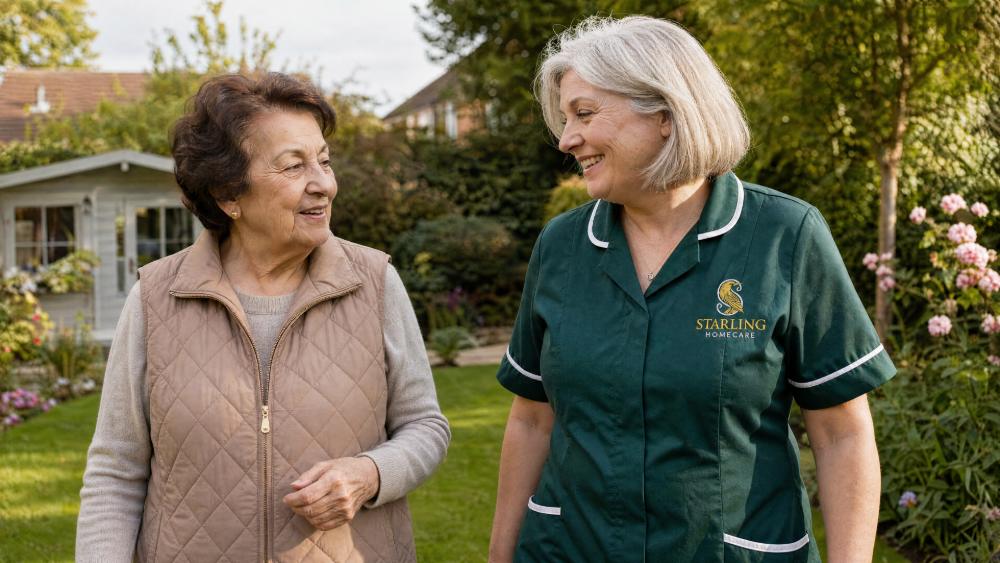
Choosing between home care or a care home in Potters Bar usually comes down to one question: can your relative's needs be met safely where they live now? When they can, care at home tends to keep routines, neighbours and familiar rooms intact; when they cannot, a good care home is often the kinder and safer choice.
Neither answer is a failure. This guide sets out, as fairly as we can, when each option tends to work, what to ask, and how funding works in outline. For the wider picture across the county, our Hertfordshire guide to home care or a care home covers the decision in more depth.
When is a care home the better choice?
We arrange care at home, so it matters that we say this plainly: sometimes a care home is right. The NHS guide to care homes and how to choose one says a care home may be the best option if someone is struggling to live alone, or has a complex medical condition needing specialist care day and night.
The NHS explains there are two main types. Residential homes provide accommodation and personal care, while nursing homes always have one or more qualified nurses on duty. Some homes offer both.
A care home can also suit someone who would like company around them all day, with shared meals and activities in a communal setting. It may be the practical answer when a house cannot be adapted, for example where stairs are unavoidable or space is too tight. If a council needs assessment recommends a care home, that is worth taking seriously too.
When does staying at home tend to work?
Age UK suggests that before choosing a care home, families weigh other options, including adapting the home and home care. Small changes around the house can make a real difference to safety and confidence.
Care at home comes in two main forms. The NHS describes visiting homecare as very flexible, ranging from about an hour a week to several hours a day or overnight. Live-in care means a carer lives in the home, which can suit people who need someone close by through the day and night. Our guide to live-in care in Potters Bar explains how that works locally.
Staying at home tends to work well when a person's needs are practical rather than clinical. That might mean help with washing and dressing, meals, prompting medication as set out in the care plan, getting to appointments, housework and company. Anything clinical should go through the GP, NHS 111 or the hospital team.
It also works when the person has a strong attachment to their home and community. For someone who has lived in Cuffley or Northaw for decades, the same view from the window, the same neighbours and the same walk to the shops can matter a great deal.
Questions to ask when weighing home care or a care home in Potters Bar
Whichever way you lean, the questions are similar. Age UK groups care home questions around staff, meeting care needs, day-to-day life, food, visitors, contracts, fees and complaints, and advises focusing on what matters most to you.
Useful questions for any provider include:
- Will my relative see the same carers or staff regularly, and is there a named person?
- How is the care plan agreed, and how often is it reviewed with the family?
- What happens if needs increase, or if we want to change the arrangement?
- How are fees structured, and are there any extra charges?
- Can we read the contract before agreeing, and is there a trial period?
Age UK also recommends visiting a care home more than once and checking current vacancies or waiting lists. For home care, a home visit and an unhurried conversation with the local manager serve the same purpose.
How to check any provider's CQC rating
The Care Quality Commission regulates health and adult social care in England, and the NHS confirms all homecare agencies must register with it. The CQC website lets you search inspection reports and ratings to compare services, filtering by location and distance.
The CQC rates services on a four-point scale: Outstanding, Good, Requires improvement and Inadequate. Read the most recent full report, not only the headline rating, and ask the provider about anything that concerns you.
How funding works, in outline
The first step is usually a care needs assessment from your local council's adult social services. The NHS recommends one even if you plan to arrange care privately, as it helps explain needs to a provider.
If the council may help pay, it carries out a financial assessment. The NHS says this looks at the person's own income and savings, not their relatives'. The NHS also advises not to sell a home or end a tenancy before the council has decided.
Attendance Allowance is worth checking. GOV.UK says it is for people at State Pension age or older whose condition means they need someone to help look after them, and it is paid at £76.70 or £114.60 a week depending on need. The NHS notes it is not means tested.
Support around Potters Bar, whatever you decide
Staying connected matters in either setting. The Sixty Plus Lunch Club meets at the Wyllyotts Centre, Wyllyotts Place, on Tuesdays and Thursdays, with lunch served at midday for people over 60 who live in the Potters Bar and South Mimms area.
Family carers may find the Carers in Herts Potters Bar Hub helpful. It runs on Wednesday 28 October 2026, 10:30am to 12:30pm, at King Charles the Martyr Church, Mutton Lane, and all carers are welcome; places can be booked through the Carers in Herts website.
Talking it through with our Potters Bar team
Our local team arranges care across Potters Bar and the surrounding villages, and can talk through home care or a care home in Potters Bar with you before anything is decided. You can reach them on 01707 714 000 or at [email protected], and read more on our Potters Bar home care page.
Visiting care starts from £34 an hour, live-in care from £255 a day, and live-in care for couples from £295 a day. These are starting rates; a price is agreed after an assessment, once we understand the support needed. Our approach to later life care centres on familiar carers, consistent visits and a care plan agreed with the family.
Common questions about home care or a care home in Potters Bar
Can Attendance Allowance be paid to someone in a care home?
GOV.UK says it cannot usually be paid if the person lives in a care home funded by the local authority. It can still be claimed by someone who pays all their care home costs themselves. It does not depend on having a carer.
Does the council look at our family's savings?
No. The NHS explains the council's financial assessment considers the person receiving care, not their relatives. Family may choose to pay a top-up towards a care home, but that is a separate arrangement.
Is a nursing home the same as a residential home?
Not quite. According to the NHS, both provide personal care such as help with washing and dressing. The difference is that a nursing home always has at least one qualified nurse on duty.
Could we try care at home first?
Some families do, and it can be a sensible way to learn what level of support is needed. If needs grow beyond what can be met safely at home, a care home remains an option. The council's needs assessment can help guide that conversation.
There is rarely one perfect answer, only the best fit for a particular person at a particular time. Take each step at a pace that feels right for your family, gather the facts, and keep your relative's own wishes at the centre of every conversation.
Details checked against the NHS, Age UK, the CQC and GOV.UK Attendance Allowance on 12 October 2026. Our prices are starting rates, checked on the same date.
Arranging Care Is Simple
Starting care can feel like a big step. We keep it calm and straightforward, and we are here to guide you from your very first call.
1. Talk to us
Get in touch by phone or request a callback. We will listen, answer your questions and help you understand the options, so you can decide what feels right in your own time.
2. A home visit and initial consultation
We arrange a visit to understand your routines, your home and what matters most to you. Together we agree an initial consultation and shape the support that feels right.
3. Your care begins
A small, familiar team starts your care, arriving at the agreed times and staying involved as your needs change. We remain your trusted adviser throughout.
Whenever you are ready, we are here to help.