
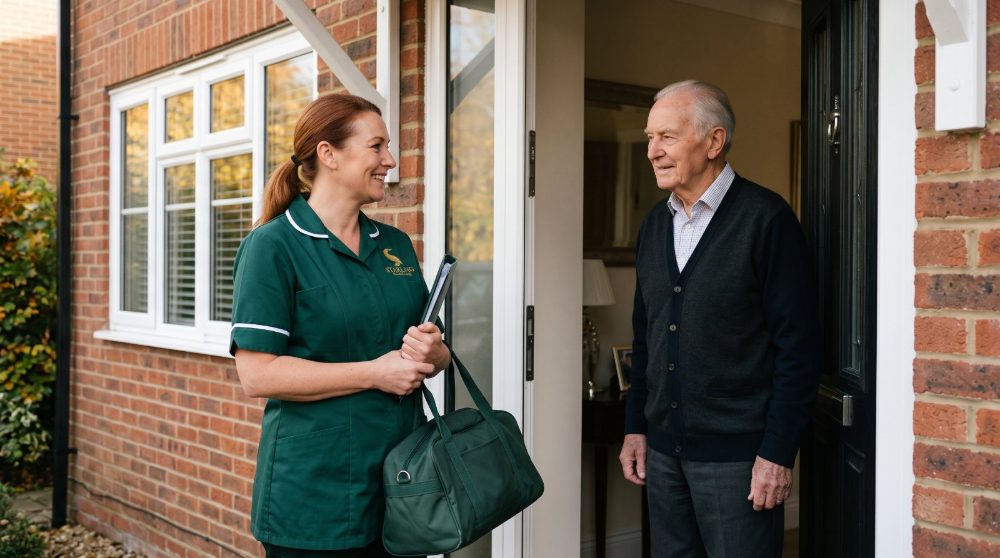
Home care after hospital in Radlett and Shenley is about getting the first week home right. Coming home from Watford General or St Albans City Hospital is not the end of a hospital stay. It is the start of the part that matters most: the first week back in your own home in Radlett or Shenley. What happens in those first few days decides whether a recovery holds or a person ends up back on a ward. Who visits, who prompts the medication, and who notices if something is not right, all matter. This is what actually happens in that first week, and where a private carer fits in alongside the NHS and county council support already there.
Why the first week home matters
A new analysis by the King's Fund, reported by the Chartered Society of Physiotherapy on 8 July 2026, found nearly 13,000 people a day being kept in an English hospital bed after they were medically fit to leave. That is up by around 300 a day on the 2024/25 average. That is close to one in ten hospital beds occupied by someone who no longer needs to be there. The cost to the NHS is about £2.7 billion a year. The delay is rarely medical. It is far more often that nobody was confident there would be enough support in place at home.
For a family in Radlett or Shenley, that statistic has a very practical flip side. Once a bed is freed up and a discharge date is set, the pace can feel sudden. The person coming home may still be unsteady, on new medication, or simply exhausted. The household has to be ready faster than it feels ready to be.
What happens before you leave hospital
Every NHS hospital, including Watford General, has a hospital social care team. Hertfordshire County Council's own guidance is to ask to speak to them as soon as a discharge date is discussed. They can then talk through day-to-day life at home and work out what help is realistic. This might include equipment, meals, or a home visit to help someone get back on their feet (what the council calls enablement). It can also mean help getting settled on the first day back, such as the heating on and a bit of shopping in.
HertsHelp, the county's free independent advice line on 0300 123 4044, is the other number worth having before you leave hospital rather than after. It can arrange short-term practical support, and, through the Reach Out volunteer scheme, some company and encouragement while someone finds their feet again.
Where home care after hospital in Radlett and Shenley fits in
Council enablement visits are usually short, time-limited, and focused on regaining specific tasks, which is exactly right for what they are designed to do. What they are not designed to do is sit with someone for a full morning while a family member is still at work. Nor do they prompt medication three times a day. Nor are they there to notice, on the Wednesday rather than the following Monday, that a wound dressing needs a second look or that appetite has dropped off.
That is where home care after a hospital stay comes in, working alongside the enablement team rather than instead of it. In the first week we typically see a family in Radlett or Shenley wanting help with getting up and dressed safely. A proper hot meal, rather than a slice of toast, matters too, along with prompting for a new or changed medication list. Someone keeping a genuine eye on mood and appetite catches the two earliest signs that a recovery is not going quite to plan.
A realistic first week of home care after hospital
Day one is rarely about doing very much at all. It is about getting home safely, unpacking discharge medication correctly, and having one calm, familiar face there rather than an empty house. By day three or four, most people are managing a little more themselves. The carer's role shifts to steady encouragement: a supported walk to the end of the garden, a proper breakfast eaten at the table, a chat that is not about being ill. By the end of the first week, the shape of ongoing support is usually much clearer than it was on day one, whether that is a few visits a week or something more. Decisions can then be made from evidence rather than guesswork.
Local support around Radlett and Shenley for home care after hospital
Hertsmere Borough Council keeps a page of practical local support for older residents. This includes the Communities 1st Transport Link community car scheme, which covers Radlett, Shenley, Aldenham and the rest of the borough for getting to follow-up appointments. It also lists the joint Safe and Well visits run with Hertfordshire's fire and rescue service, which check a home is warm, safe and fall-free. None of this replaces daily care, but combined with home care after hospital in Radlett and Shenley, it is what a genuinely supported first month home looks like.
See our home care support in Radlett and Shenley for more on how visits are arranged locally.
Frequently asked questions
Do I need to arrange home care before leaving hospital, or can it wait?
It helps enormously to have it arranged, or at least agreed, before the discharge date. The first 48 hours are when the risk of a fall, a missed dose or a simple loss of confidence is highest. Speak to the hospital social care team as soon as a date is mentioned, and call us in parallel so a carer can be ready for the day you come home.
What is the difference between the council's enablement visits and a private carer?
Enablement visits from the council are short-term and task-focused, helping someone regain a specific ability such as washing or dressing independently. A private carer from Starling can offer longer, more flexible visits alongside that, covering meals, medication prompts, company and the kind of steady daily oversight that catches small problems early.
How quickly can Starling start after a hospital discharge in Radlett or Shenley?
We aim to have a carer in place from the day someone comes home wherever we can. An early call, even before a firm discharge date, makes the biggest difference. Call 01923 988 550 and we will talk through what is needed and how fast we can be there.
Arranging Care Is Simple
Starting care can feel like a big step. We keep it calm and straightforward, and we are here to guide you from your very first call.
1. Talk to us
Get in touch by phone or request a callback. We will listen, answer your questions and help you understand the options, so you can decide what feels right in your own time.
2. A home visit and initial consultation
We arrange a visit to understand your routines, your home and what matters most to you. Together we agree an initial consultation and shape the support that feels right.
3. Your care begins
A small, familiar team starts your care, arriving at the agreed times and staying involved as your needs change. We remain your trusted adviser throughout.
Whenever you are ready, we are here to help.