
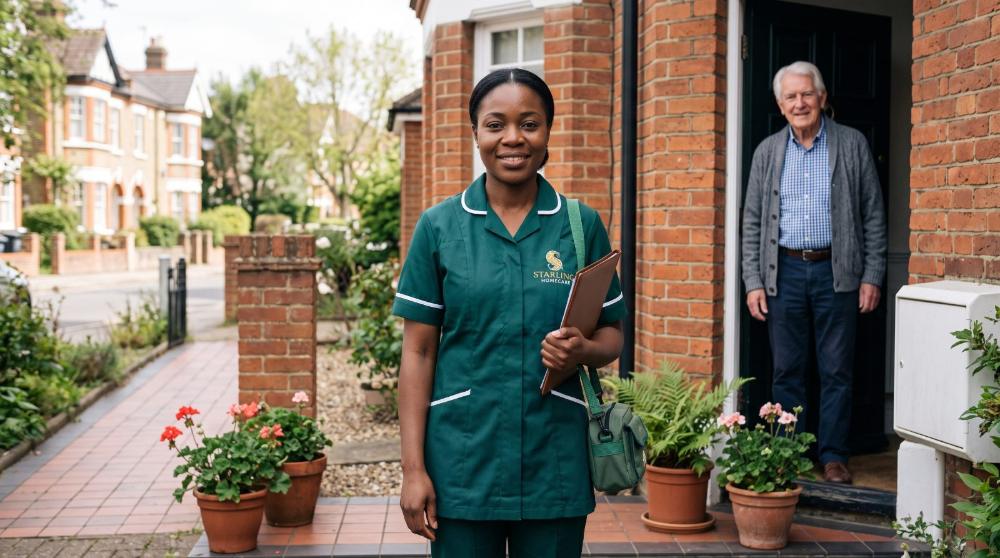
If a planned operation is in your diary, home care after hospital in Berkhamsted can be organised before you ever pack a bag. Arranging support in advance means coming home to a warm house, a full fridge and a familiar face, instead of trying to organise help while you recover.
Most advice about care after hospital assumes an emergency: a fall, a sudden admission, a scramble on discharge day. A planned operation is different. You know the date, you know roughly what recovery will ask of you, and you have the one thing families in a crisis never get, which is time.
Used well, that time takes most of the stress out of coming home.
A planned operation gives you time to prepare
For planned surgery, West Hertfordshire Teaching Hospitals runs its elective work at St Albans City Hospital, its dedicated elective care centre, covering a wide range of day-case and lower-risk inpatient operations. Much of it is day-case, which means recovering at home from the first evening.
The hospital handles the operation. Recovery, though, happens at home, and the first weeks back are when help genuinely counts.
What is worth arranging at home before you go in
The practical list is mostly domestic, and it is best worked through in the unhurried weeks before admission. Food in the freezer, laundry up to date, everyday things moved within easy reach, and a key safe or a trusted neighbour so a carer can let herself in.
Then decide who is doing what in the first week. If family are covering some days, plan the gaps honestly rather than hoping they will not matter. The hospital's own recovery advice will tell you what you should not be doing for a while, and that list is exactly where home care fits.
We visit before your admission, write the care plan with you, and agree a start date that matches your expected homecoming. If discharge moves, the plan moves with it.
What home care after an operation actually covers
The early days are about ordinary things that suddenly take effort: washing and dressing, meals worth eating, medication prompts, laundry, shopping and a steady presence around the house.
It is also company and a second pair of eyes. A carer who comes each morning notices whether you are eating, moving and mending, and says so, kindly, if you are overdoing it.
What it is not is clinical care. Wound checks and physiotherapy stay with the hospital, your GP and the community teams. Our job is to make the rest of life easy enough that recovery gets your full energy, and our post-hospital care page explains the service side in more detail.
How support steps down as you recover
Post-operative care is built to shrink. Two visits a day in the first week might become one, then three mornings, then none, as strength returns and the hospital's milestones are met.
There is no fixed package to see out. Because the arrangement is private, it follows your recovery rather than asking your recovery to follow a rota, and how this works across the county is covered in our Hertfordshire guide to home care after hospital.
Arranging it from Berkhamsted
We are a family-run, CQC-registered homecare provider, and short post-operative packages are a regular part of our work in Berkhamsted. The same local team stays with you from the first conversation to the last visit, and the local detail is on our Berkhamsted page.
If an operation date has just arrived in the post, our Berkhamsted team is on 01442 954 137 or at [email protected].
The first 48 hours at home
The first two days back set the tone for the rest of the recovery. They are usually the most tiring, the most sore and the most tempting time to do too much, precisely because being home feels like being better.
This is where a morning and an evening visit earn their keep: help washing and dressing while movement is stiff, a proper meal on the table, prescriptions collected, and someone making sure the day ends as steadily as it began.
It is also when questions surface: what counts as normal tiredness, whether to keep the follow-up appointment, who to ring if something does not feel right. A carer cannot answer the clinical ones, but she makes sure they reach the people who can, promptly and without drama.
Family often want to be there for these first days, and that works well alongside paid visits rather than instead of them. Relatives provide the company and the familiarity; the carer covers the practical care that is awkward for everyone when a son or daughter does it.
Common Questions About Home Care After Hospital in Berkhamsted
Should I arrange home care before or after my operation?
Before, wherever the operation is planned. Arranging care two or three weeks ahead means the plan, the introductions and the start date are all settled before you are admitted. Waiting until afterwards means organising help at exactly the moment you have the least energy for it.
What does home care after surgery include?
Practical, non-clinical support: personal care such as washing and dressing, meals, medication prompts, housework, shopping and companionship. Clinical matters like wound care and physiotherapy remain with the NHS teams looking after you, and the two work best side by side.
How long do people need help at home after a planned operation?
It varies with the operation and the person, and your hospital team's guidance is the honest yardstick. Some people want a week or two of daily visits; others step support down over a couple of months. Privately arranged care can flex week by week, so it ends when you are ready.
An operation date on the calendar is a deadline, but it is also a chance to get properly organised. A little planning now means the weeks afterwards are about recovering, not coordinating. If it would help to talk the practicalities through, the Berkhamsted team is on 01442 954 137.
Arranging Care Is Simple
Starting care can feel like a big step. We keep it calm and straightforward, and we are here to guide you from your very first call.
1. Talk to us
Get in touch by phone or request a callback. We will listen, answer your questions and help you understand the options, so you can decide what feels right in your own time.
2. A home visit and initial consultation
We arrange a visit to understand your routines, your home and what matters most to you. Together we agree an initial consultation and shape the support that feels right.
3. Your care begins
A small, familiar team starts your care, arriving at the agreed times and staying involved as your needs change. We remain your trusted adviser throughout.
Whenever you are ready, we are here to help.