
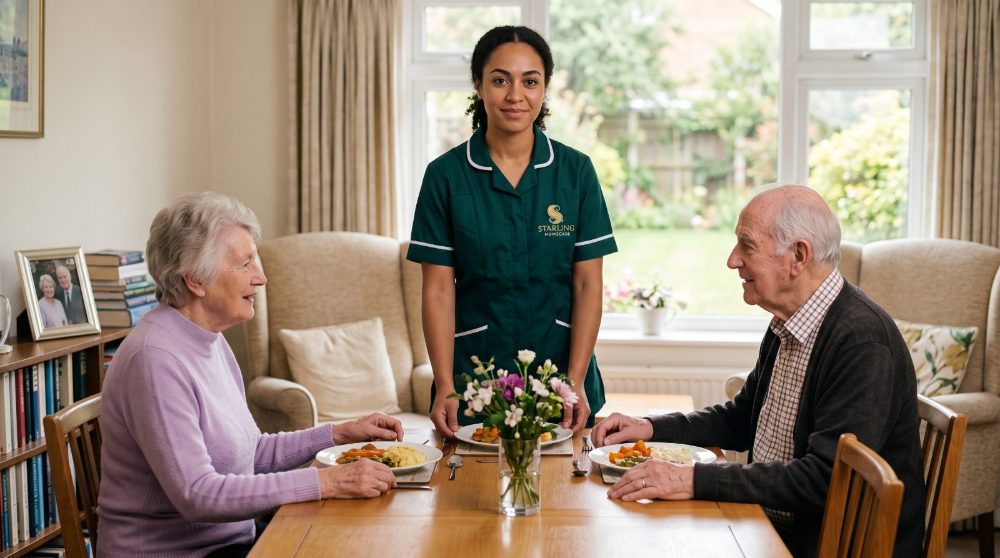
Help at home in Tring is usually arranged for one person. But the households that need it most often contain two: the partner who needs support, and the partner who has gradually become a carer without ever using the word.
Couples are remarkably good at covering for each other. One remembers what the other forgets. One does the stairs, the other does the forms. From the outside, everything looks fine.
Inside, both people are often working harder every month to keep it looking that way. The right help at home is shaped around both of them, and this article explains what that looks like.
How does caring creep up on a couple?
Almost nobody in a long marriage decides to become a carer. It arrives one small task at a time: help with buttons, then with the bath, then with the nights. Each step feels too small to mention.
By the time families we support in Tring first ring us, the caring partner has often been running the whole house, and another person's needs, for years. Many are tired in a way they have stopped noticing.
The habit of not making a fuss is strong, and in many ways admirable. But when one partner's wellbeing depends entirely on the other's stamina, the household is more fragile than it looks.
What does help at home look like for two people?
It rarely starts with anything dramatic. A regular visit that takes the cleaning, laundry and shopping off both of you at once can change the feel of a week on its own.
Where one partner needs personal care, a carer taking that on gives the mornings back to both of you. The help is practical, but the outcome is the point: you get to be a husband or wife again, rather than a rota.
A companionship visit works the other way round. With someone trusted in the house, the caring partner can go out, see friends, or simply have two hours that belong to them, without listening for the door.
Meals are worth a mention of their own. When cooking for two has slipped to toast for two, a carer preparing proper meals lifts both nutrition and morale, and it is one of the first changes couples tell us they notice.
Keeping your life in Tring going
Tring is a town with a genuine community life. Tring Together, the local charity whose purpose is simply making life better in Tring, fills the calendar year after year, from the Spring Fayre to the Summer Carnival to the Christmas Festival that lights up the High Street.
The real measure of good help at home is that these things stay possible. Support in the house should mean more energy for the town, not a retreat from it.
That is what we mean when we say care should be shaped around a life, not the other way round. The routines, friendships and small traditions a couple has built here are exactly what the help exists to protect.
Starting small, and what happens if needs grow
Most couples begin with one visit a week and adjust from there. A good arrangement is reviewed as things change, and it can grow or shrink without drama.
The home stays yours throughout. The kettle lives where it lives, the garden gets weeded the way it always has, and the carer works to your standards rather than imposing their own. Families we support often say the surprise was not the help itself, but how little it disturbed.
If one partner's needs become more substantial, care at home can still keep you together. Live-in care in Tring supports couples in their own home, and for many it is the alternative that avoids a move neither person wants.
What support exists for the caring partner?
Age UK's advice on arranging care starts in the same place we do: a care needs assessment from the council's social services for the person needing support. Less well known is that the caring partner can ask for a carer's assessment in their own right, looking at what would help them keep going.
Age UK also runs a free national Advice Line on 0800 678 1602, open every day. Asking questions early, before anything feels urgent, is the single most useful thing a couple can do.
Common Questions About Help at Home in Tring
Can home care support both of us as a couple?
Yes. Although care is formally arranged around the person with assessed needs, a good plan is shaped around the household. Domestic help lifts work off both partners, and visits can be designed so the caring partner gets genuine time back as well.
How do we accept help without it taking over our home?
Start small and stay in charge. One regular visit, with the same carer wherever possible, doing the things you have chosen to hand over. The arrangement should follow your routines and standards, and a provider worth having will expect you to set those terms.
What support is there for the partner who does the caring?
You can ask the council's social services for a carer's assessment in your own right, which looks at what would help you continue caring without wearing yourself down. Age UK's free Advice Line on 0800 678 1602 is a good starting point for understanding the options.
If you are in Tring and some of this sounds familiar, it may simply be time to let the house share the work it has been asking of you both. Our local team is on 01442 954 137, and our Tring home care page explains how support usually begins.
Arranging Care Is Simple
Starting care can feel like a big step. We keep it calm and straightforward, and we are here to guide you from your very first call.
1. Talk to us
Get in touch by phone or request a callback. We will listen, answer your questions and help you understand the options, so you can decide what feels right in your own time.
2. A home visit and initial consultation
We arrange a visit to understand your routines, your home and what matters most to you. Together we agree an initial consultation and shape the support that feels right.
3. Your care begins
A small, familiar team starts your care, arriving at the agreed times and staying involved as your needs change. We remain your trusted adviser throughout.
Whenever you are ready, we are here to help.