
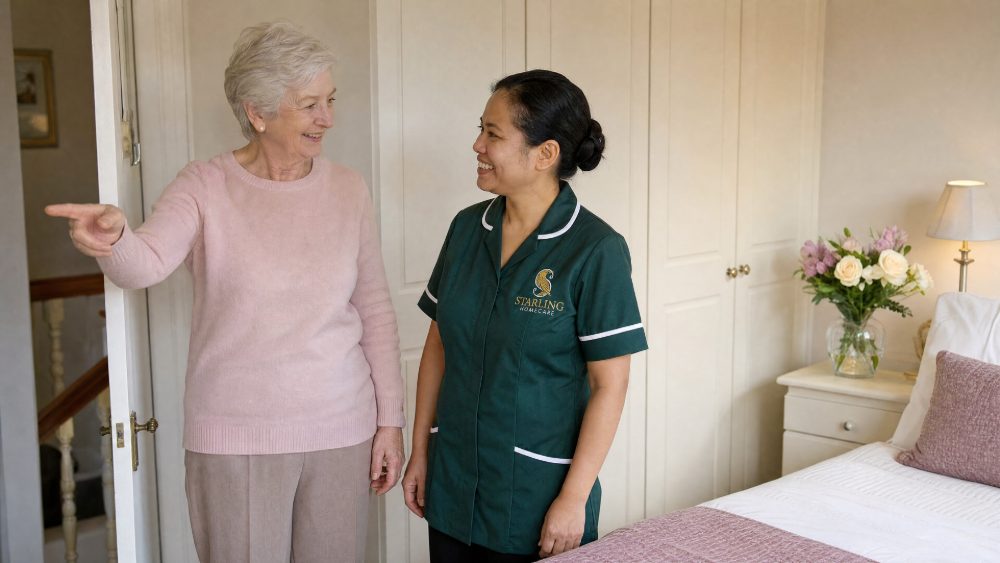
Preparing for a live-in carer is mostly about small, practical things: a comfortable room for the carer, a few notes about how your parent likes their day to run, and clear arrangements for keys, medicines and breaks. When these are settled before the first day, the house stays your parent's home and the carer can focus on them from the start.
Families we support often tell us the weeks before a live-in carer arrives feel busier than they expected. This guide to preparing for a live-in carer walks through what is worth sorting out, in the order most families find useful. If you are still weighing up the options, our guide to live-in care in Harpenden covers what it involves, and our comparison of live-in care or visiting care may help you decide.
A room of their own and a quiet place to rest
A live-in carer needs their own bedroom. A bed, somewhere to hang clothes, a set of drawers and a bedside light make a real difference to someone who will be living there for weeks at a time.
It helps if the room has a door that closes and curtains or blinds that keep out the morning light. Clear a shelf or a cupboard in the kitchen or bathroom for their things too. A little storage space tells the carer they are expected and welcome.
Wifi matters more than families sometimes realise. The carer will want to call their own family, and good wifi means they can rest properly in their downtime. Write the network name and password on a card and leave it in the room.
Preparing for a live-in carer: routines and preferences
Before the carer arrives, we agree a care plan with your parent and the family. Alongside it, a short, informal note about the household is often the most useful thing a family can prepare.
Think about the details only you know. How does Mum take her tea? Which chair is Dad's? Does she like the radio on in the morning, or quiet until ten? Which bins go out on which day, and where does the dog like to walk?
None of this needs to be formal. A notebook left on the kitchen table works well, and the carer can add to it as they learn. Many families include the names of friendly neighbours and the local shops their parent uses.
Keys, access, medicines and GP details
Agree how the carer will come and go. Most families give the carer a set of house keys, and some use a key safe so the family and visiting professionals can also get in. Write down alarm codes and where the stopcock and fuse box are.
Keep an up-to-date medicines list, along with the GP surgery's name and phone number and the local pharmacy. The NHS guide to homecare lists remembering to take medicines among the everyday things a paid carer can help with. Our carers prompt medication as set out in the care plan, and anything clinical goes to the GP, NHS 111 or the hospital team.
Food, meals and the shopping
Live-in carers usually eat with, or alongside, the person they support. It is worth agreeing at the start how the carer's food is provided, and whether there is a household budget for shopping.
Note any favourite meals, foods your parent dislikes and any dietary needs the GP or hospital has advised. Mealtimes are often one of the best parts of the day, so a few family recipes can help a new carer get it right early on.
Breaks, time off and the carer's wellbeing
Live-in care works best when the carer is well rested. A live-in carer needs a daily break, and regular time off when another carer steps in.
We agree with the family how the daily break is covered. Some families like to visit at that time, others are happy for their parent to have a quiet spell while the carer rests nearby. We plan cover for longer periods of time off in advance, so your parent knows who is coming and when.
The first week and keeping in touch
The first few days are about getting to know each other. We usually suggest the carer spends them learning your parent's routines, meeting the neighbours and finding their way around the town.
Keeping familiar routines going is one of the quiet benefits of live-in care. In Harpenden, for example, the Memory Lane Café is open every Monday from 2 to 3.30pm, except bank holidays, at The Salvation Army on Leyton Green. If your parent already goes, a carer can help them keep going each week.
Agree early how the family will stay in touch. Some families like a short phone call each evening, others prefer a weekly catch-up with our local team. Most families find the first week settles into a rhythm faster than they expected.
Our local team in Harpenden
Our Harpenden team arranges live-in care across the town and surrounding villages. Live-in care starts from £255 a day, and live-in care for couples starts from £295 a day. These are starting rates, and a price is agreed after we have carried out an assessment with you.
All homecare agencies must register with the Care Quality Commission, the independent regulator of health and social care in England, and you can read its inspection reports. We are regulated by the CQC. You can reach our Harpenden team on 01582 824 830 or at [email protected], and there is more on our home care in Harpenden page.
Common questions about preparing for a live-in carer in Harpenden
Does a live-in carer need their own bedroom?
Yes. A private bedroom with a bed, storage and somewhere to rest is essential, because the carer lives in the home for weeks at a time. A room that is quiet and dark at night helps them stay well rested for your parent.
What should we write down before the carer arrives?
Start with the medicines list, GP and pharmacy details, keys and alarm codes. Then add the personal touches: favourite meals, daily habits, regular outings and the names of neighbours. A simple notebook is enough, and the carer will add to it.
How is the carer's daily break covered?
We agree this with each family before care begins. Some families visit during the break, while others are comfortable with a quieter spell at home. Longer time off is planned ahead, so your parent knows who is coming and when.
How will we know how things are going?
We agree a way of keeping in touch that suits your family, such as regular calls with the carer or catch-ups with our local team. You are welcome to visit as often as you like. If anything needs adjusting, we review the care plan with you.
Preparing for a live-in carer is less about the big decisions and more about the small details that make a house feel like home. With a little preparation, your parent can carry on with the routines and places that matter to them, with steady company alongside.
Details checked against the NHS homecare guide, the Care Quality Commission website and Harpenden Town Council's dementia friendly town page on 12 October 2026. Our prices are starting rates, checked on the same date.
Arranging Care Is Simple
Starting care can feel like a big step. We keep it calm and straightforward, and we are here to guide you from your very first call.
1. Talk to us
Get in touch by phone or request a callback. We will listen, answer your questions and help you understand the options, so you can decide what feels right in your own time.
2. A home visit and initial consultation
We arrange a visit to understand your routines, your home and what matters most to you. Together we agree an initial consultation and shape the support that feels right.
3. Your care begins
A small, familiar team starts your care, arriving at the agreed times and staying involved as your needs change. We remain your trusted adviser throughout.
Whenever you are ready, we are here to help.