
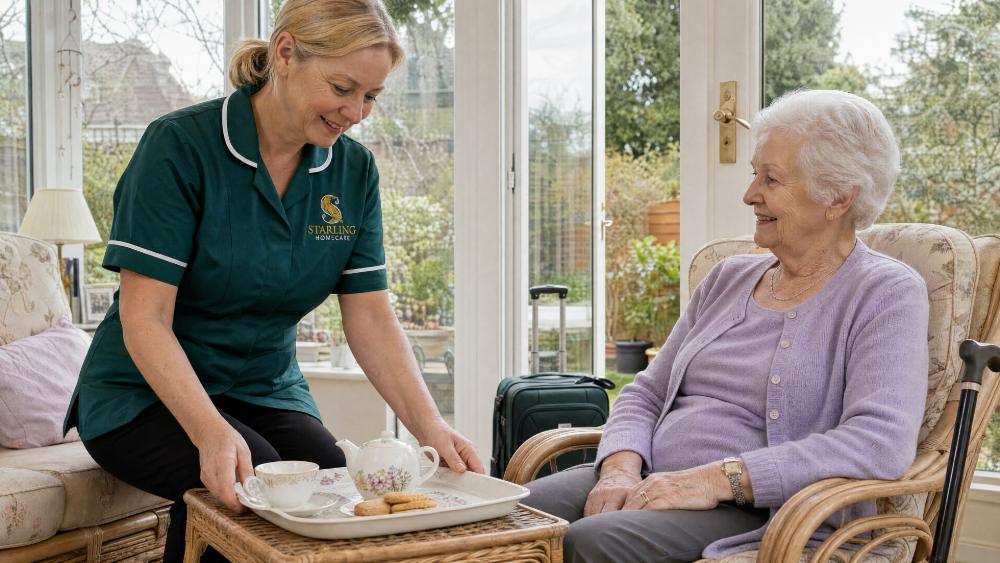
Short-term live-in care in St Albans means a carer lives in your relative's home for a few weeks, rather than for good. It suits families who need steady support through the day and night for a set period, then want to step back, change the plan or carry on.
Short placements usually begin with a change nobody planned for. A parent has had a fall, an operation is booked, or the person doing all the caring is close to exhausted. A short placement gives everyone breathing space while the longer picture becomes clearer.
Why families choose short-term live-in care in St Albans
We tend to hear three reasons, and they often overlap.
Coming home from hospital or after an operation. The first weeks at home can feel fragile, even when the hospital is happy for someone to leave. The NHS guidance on planning to leave hospital explains that hospital staff plan discharge with the patient, and family and carers can join those discussions if the patient wants them to.
Giving a family carer a proper break. Respite is not only for holidays. The NHS notes that if the person you care for needs 24-hour supervision, you can arrange live-in care while you rest.
Trying live-in care before a bigger decision. Some families are weighing up a care home, a move, or long-term live-in care. A few weeks with a carer at home shows what day-to-day life would look like, which is far more useful than guessing.
How short-term live-in care differs from visiting care
Visiting care is built around set calls, perhaps a morning visit to help with washing and dressing and an evening visit for supper. Between calls, your relative is on their own.
With live-in care, the carer is in the home throughout the day. That means company at mealtimes, help to move about the house safely, prompting medication as set out in the care plan, and someone nearby if your relative wakes in the night. Carers also have agreed rest breaks and time off, which we plan with you at the start.
For many people recovering at home, the difference is reassurance. A daughter in London or a husband who is tired himself can sleep, knowing someone familiar is there.
What a short placement looks like
Every placement starts with an assessment, usually at home, where we meet your relative and talk through routines, preferences and what matters to them. We then write a care plan with the family, covering personal care, meals, housework, getting to appointments and the small habits that make a day feel normal.
We introduce the carer before or on the first day, and a member of our local team stays in touch throughout. If needs change, we review the plan rather than carry on regardless.
You can read more about how longer arrangements work in our main guide to live-in care in St Albans, and about the service as a whole on our live-in care page.
What the home needs
The main practical requirement is a private bedroom for the carer. It does not need to be large, but it should be a room they can rest in, with somewhere to keep their belongings.
Beyond that, we will talk through the layout of the house, any stairs, and where your relative is most comfortable. A cottage in Redbourn and a family house in Sandridge can both work well; the details simply shape the plan.
How quickly it can be arranged
We cannot promise a fixed timescale, because it depends on carer availability and on your relative's needs. What helps most is getting in touch as early as you can, for example as soon as an operation date is set or as soon as the hospital starts talking about discharge.
Age UK explains that many hospitals use a "discharge to assess" or "home first" approach. Some people may be eligible for free short-term NHS or council support, known as intermediate care or reablement, which the NHS says is usually for a maximum of 6 weeks. Ask the hospital team what is being offered, so any private care fits around it. Our guide to home care after hospital in St Albans covers this in more detail.
Minimum lengths of stay vary and are agreed at the assessment. We will be clear about what is possible before anything is arranged.
How a short placement ends, or carries on
Some placements finish exactly as planned. Your relative has recovered, the family carer is back from their break, and everyone agrees the time is right.
Others change shape. A family might move to a few visits a day, extend live-in care for a few more weeks, or decide it should become the long-term arrangement. Because the carer and the care plan are already in place, any change can be made calmly, with a review rather than a fresh start.
Support for family carers in St Albans
If you are the main carer, you are entitled to look after yourself too. The NHS says carers should have a carer's assessment, and councils only fund respite for people they have assessed as needing it.
Carers in Herts runs a St Albans Carer Support Hub on Tuesday 20 October 2026, 10.30am to 12.30pm, at St Pauls Church, Blandford Road. Carers can meet others, share information and chat over a cuppa. Carers in Herts can be reached on 01992 58 69 69.
Our St Albans team and prices
We are an independent, family-run home care provider based in St Albans, regulated by the Care Quality Commission. The CQC describes itself as the independent regulator of health and social care in England, and you can search its website for any provider's inspection reports.
Live-in care starts from £255 a day, and live-in care for couples starts from £295 a day. These are starting rates; your price is agreed after an assessment, once we understand the support needed. You can reach our local team on 01727 324 127 or at [email protected], and find more about our work across the district on our St Albans home care page.
Common questions about short-term live-in care in St Albans
Is there a minimum length for a short placement?
Minimum durations vary, so we do not quote one here. We agree the length at the assessment, based on your relative's needs and carer availability. Many families start with a set number of weeks and review as they go.
Can short-term live-in care follow NHS reablement?
Yes, it can sit alongside or follow any free short-term support the hospital or council arranges. The hospital team can tell you what is being offered and for how long. We then plan private care to fill the gaps, rather than duplicate them.
Does my relative need to be very unwell to have live-in care?
No. Many people we support are simply less steady after an operation, or their partner needs time away from caring. Live-in care is about practical, everyday help and company, not clinical treatment. For anything medical, the GP, NHS 111 or the hospital team remain the right people to ask.
What happens if we want to keep the carer on?
You can talk to us about extending the placement at any point. We will review the care plan, check carer availability and confirm the cost before anything changes. Familiar faces matter, so we try to keep continuity wherever we can.
Deciding on care for a few weeks is often easier than deciding for good. It gives your relative time to recover, gives you room to rest, and lets the whole family see what helps before settling on anything longer.
Details checked against the NHS guide to carers' breaks and respite care, the NHS guide to planning to leave hospital, Age UK's guide to leaving hospital, the Care Quality Commission website and the Carers in Herts event page on 12 October 2026. Our prices are starting rates, checked on the same date.
Arranging Care Is Simple
Starting care can feel like a big step. We keep it calm and straightforward, and we are here to guide you from your very first call.
1. Talk to us
Get in touch by phone or request a callback. We will listen, answer your questions and help you understand the options, so you can decide what feels right in your own time.
2. A home visit and initial consultation
We arrange a visit to understand your routines, your home and what matters most to you. Together we agree an initial consultation and shape the support that feels right.
3. Your care begins
A small, familiar team starts your care, arriving at the agreed times and staying involved as your needs change. We remain your trusted adviser throughout.
Whenever you are ready, we are here to help.