
Caring for someone with cancer at home is mostly not about the illness itself. It is about the weeks around treatment: the days when nothing is possible, the appointments, the meals that do not get eaten, and knowing which symptoms mean pick up the phone now.
Doctors usually give treatment in cycles over several months, with a break between each one so the body can recover. That rhythm is the thing families end up organising their lives around, and it is more predictable than most people expect once they have been through a cycle or two.
If you are supporting someone with cancer in Hertfordshire, the practical question is rarely how to nurse them. It is how to keep everything else standing.
What the treatment weeks actually look like
Most people attend as outpatients and come home the same day.
Some chemotherapy comes as tablets or capsules taken at home. Some arrives through a small wearable pump that delivers medicine over a few days. A great deal of what happens does not happen in a hospital at all.
The pattern within a cycle tends to repeat. The days immediately after treatment are usually the hardest, energy returns slowly across the following week or two, and then the next cycle begins.
Once you can see that shape, you can plan around it. Families we support often move the shopping, the laundry and the visitors into the better week, and keep the worse days clear.
The side effects that change daily life when caring for someone with cancer
The NHS lists the common side effects of chemotherapy: tiredness, feeling or being sick, a sore mouth and throat, a weakened immune system, anaemia and its breathlessness, bruising more easily, constipation or diarrhoea, hair loss, numbness or tingling in the hands and feet, and problems with memory and concentration.
Three of those quietly reshape a household more than the rest.
Fatigue is not ordinary tiredness and does not respond to a good night's sleep. Someone can be entirely themselves in conversation and still be unable to stand long enough to make lunch.
A sore mouth changes what can be eaten, often just as appetite and weight are already a worry. Small, soft, frequent food usually works better than a proper meal nobody can face.
Memory and concentration changes are real and well recognised, and temporary for most people, but they are frightening if nobody has warned you. Writing things down, one list in one place, takes most of the sting out of it.
Knowing when to call, and who to call
This is the part worth getting straight before you need it.
The NHS says to call the care team straight away if the person has a high temperature, which can show as feeling hot, cold, sweaty or shivery, or the skin on their back or chest feeling hotter than usual. The same applies to other signs of infection such as a sore throat, cough, diarrhoea, passing urine often or pain when passing urine.
It also applies to throbbing or cramping pain, swelling and warmth in a leg or arm, and to sudden breathlessness, sharp chest pain or coughing up blood. Those can be signs of a blood clot.
If you are not sure how to reach the care team, NHS 111 is the right call. Do not wait for morning, and do not wait to see whether it settles.
Most treatment centres give patients a card with emergency numbers on it. Put a photograph of it on your phone and a copy on the fridge, because the person who needs it may not be you.
The Hertfordshire practicalities
Mount Vernon Cancer Centre sees most people in Hertfordshire having non-surgical cancer treatment. East and North Hertfordshire NHS Trust runs it, and it provides radiotherapy and systemic anti-cancer therapies including chemotherapy.
Getting there is the part families underestimate. Appointments cluster, they overrun, and driving someone home who has just had treatment is a different journey from driving them there.
Macmillan Cancer Support runs a local support service finder and is the most useful single starting point for practical and financial help. Their information for people supporting someone with cancer speaks directly to this position.
Talk to the specialist nurse or key worker early rather than at a crisis. They are the ones who can shortcut most problems, and they expect the questions.
If you are not sure which nurse, hospice or helpline covers your side of the county, our guide to the cancer support teams that come to the home in Hertfordshire sets them out by area, with their 24 hour numbers.
Where professional care fits when caring for someone with cancer
Care at home during treatment is usually light and specific, not round the clock.
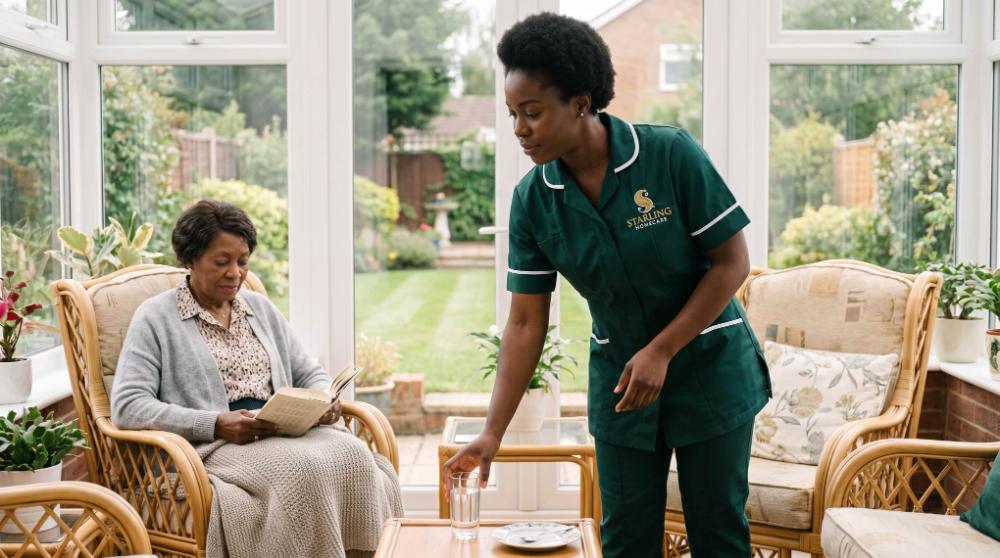
The common pattern is a visit on the difficult days: help with washing when standing in a shower is too much, something prepared to eat, the bed changed, the kitchen kept clean while the immune system is low. Our cancer care at home service is built around that, and it flexes with the cycle rather than running to a fixed rota.
The other thing it buys is a family member who is still a son, daughter or husband rather than only a carer. That matters more than most people expect by month three.
If someone has been in hospital and is coming home mid treatment, the first fortnight has its own particular demands. Our guide to home care after hospital in Hertfordshire covers who does what.
We work across Hertfordshire as an independent, family run provider registered with the Care Quality Commission. Our St Albans office is on 01727 324 127 or [email protected].
Where we support families through cancer treatment across Hertfordshire
Starling Homecare arranges regulated care at home across the whole county for people going through cancer treatment and the families supporting them.
Wherever you are in the county, you reach the team that actually covers your area:
- St Albans, 01727 324 127
- Harpenden, 01582 824 830
- Welwyn Hatfield, 01707 714 000
- Hemel Hempstead, 01442 954 137
- Berkhamsted, 01442 954 137
- Tring, 01442 954 137
- Hitchin, 01462 534739
- Hertford, 01920 746779
- Radlett and Shenley, 01923 988 550
Common Questions About Caring for Someone with Cancer at Home
What help can I get at home during cancer treatment?
Practical support usually matters most: personal care on low days, meal preparation, laundry, cleaning, and someone present while family are at work. You can arrange this privately and adjust it cycle by cycle. Your specialist nurse can also refer you to NHS and hospice community services depending on the situation.
How do I know if a temperature is serious?
Treat any high temperature during treatment as urgent and contact the care team immediately, using the emergency number on the card given at the treatment centre. Signs include feeling hot, cold, sweaty or shivery, or the skin on the back or chest feeling hotter than usual. Call NHS 111 if you cannot reach the team.
Is caring for someone with cancer the same as end of life care?
No, and it is important not to confuse the two. Most people receiving cancer treatment have treatment aimed at cure or control. What they need alongside it is practical help through a demanding period. End of life care is a different service, which families arrange when the time comes, and it involves hospice and palliative teams.
Deciding what to hand over
The families who cope best with this are rarely the ones doing the most. They are the ones who worked out early which parts they wanted to keep and which parts they were willing to give up.
Treatment plans vary widely, so nothing here replaces what the care team tells you about your own situation. For the practical side around it, our line is 01727 324 127.
Arranging Care Is Simple
Starting care can feel like a big step. We keep it calm and straightforward, and we are here to guide you from your very first call.
1. Talk to us
Get in touch by phone or request a callback. We will listen, answer your questions and help you understand the options, so you can decide what feels right in your own time.
2. A home visit and initial consultation
We arrange a visit to understand your routines, your home and what matters most to you. Together we agree an initial consultation and shape the support that feels right.
3. Your care begins
A small, familiar team starts your care, arriving at the agreed times and staying involved as your needs change. We remain your trusted adviser throughout.
Whenever you are ready, we are here to help.