
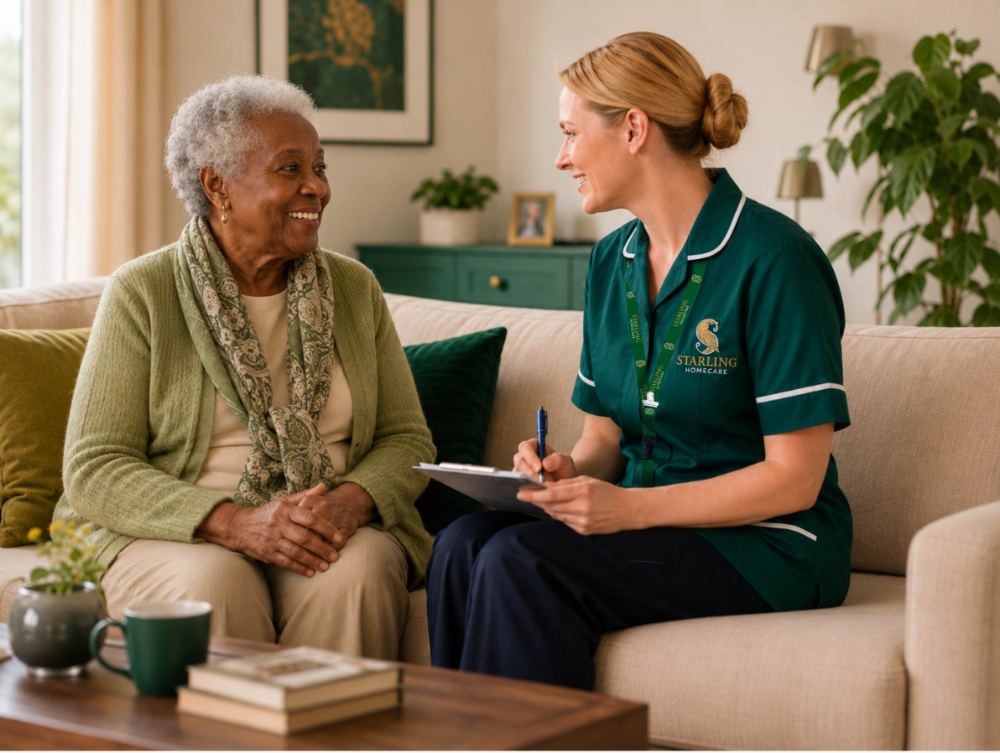
If an older relative in Hemel Hempstead is spending most of the week alone, companionship care offers a simple answer. It means a familiar carer who visits regularly for company, conversation and a little everyday help. Someone who lives on their own then has a dependable face each week.
In fact, it is one of the quietest forms of support we provide, and often one of the most valued.
Many families first notice the problem indirectly. A parent mentions they have not been out, or the calls home grow shorter. You begin to wonder how much company they really have.
Being alone and feeling lonely are not the same thing. For an older person living by themselves, though, the two often arrive together. Knowing what companionship care can offer helps you judge whether it would help.
How do you know if an older relative is becoming isolated?
Isolation rarely announces itself. Instead, it shows in small changes that you only notice when you add them up.
Age UK’s research points to how common this is. Around 270,000 older people in England go a week without speaking to a friend or family member. People in that position are almost three times more likely to feel lonely.
In the families we support, the early signs are usually practical. Fewer trips out. A diary with little in it, less interest in food, or a parent who seems flat rather than unwell.
None of these is dramatic, which is exactly why they are easy to miss.
How does regular company help someone stay well?
Loneliness is not only a matter of mood. Indeed, its effects on health are now well documented.
Age UK estimates that about 940,000 people aged 65 and over in the UK are often lonely. It links sustained loneliness with a higher risk of serious illness. Its researchers add a warning.
Without action, the number of older people who are often lonely in England could reach 1.2 million by 2034.
Regular, familiar company works against that. A weekly visit gives shape to the week. It gently encourages someone to eat and move a little more, and a familiar face will notice if anything changes.
What a companionship visit in Hemel Hempstead looks like
A visit is built around the person, not a task list. It might be a long chat over a cup of tea, or time spent with a photograph album. On a fine day, it could be a gentle walk into the Old Town.
It can fold in light, practical help too, such as preparing a meal together or sorting the post. The aim is connection, and the small jobs simply happen alongside it.
Because we keep the same carer visiting wherever we can, the relationship has time to settle. That familiarity is what turns a visit into something a person looks forward to.
What if a parent says they do not want a stranger in the house?
Of course, this is one of the most common worries families raise with us, and it is completely understandable. Few people like the idea of an unfamiliar face in their home.
In practice, resistance usually softens once visits begin and the same carer returns each time. We start gently, often with a short, low-key visit, and we never rush the relationship.
It often helps to introduce companionship as company rather than care. For many older people, that is an easier idea to welcome.
Local support for older people in Hemel Hempstead and Dacorum
Companionship care usually works best alongside what is already here, not instead of it. Hemel Hempstead has more for older residents than many families realise.
Age UK Dacorum, on the High Street, runs befriending by phone and in person. It also holds social clubs and carers’ support. Community Action Dacorum works specifically on loneliness and isolation across the borough.
The Centre in the Park gives older people in the town a regular place to meet. A familiar carer can be the steady presence that makes these easier to reach.
For someone who has lost a little confidence, an outing can feel daunting. Having help to get ready, and someone to go along with, can make it ordinary again.
How we approach companionship care
As a family run provider, registered with and regulated by the Care Quality Commission, we think carefully about who visits. The right carer is not just the one who is free. It is someone whose company a person will genuinely enjoy.
We also keep that carer consistent. A bond built on the same face, week after week, is what makes this kind of care work. So we begin by getting to know the person and the family, then shape the visits around what they like doing.
You can read more about our companionship care at home. Our look at companionship care in St Albans shows how the same approach helps families nearby.
Common Questions About Companionship Care in Hemel Hempstead
How do I know if an older relative is lonely?
Loneliness in later life is often hidden, because most older people will not raise it themselves. Watch for fewer outings, shorter phone calls, or lost interest in meals and hobbies. If you have a quiet sense that something has changed, it is usually worth gently asking.
What is the difference between companionship care and a befriending service?
A befriending service, such as the one Age UK Dacorum runs, is usually a volunteer who calls or visits. It is, however, a valuable form of support. Companionship care comes from a trained, regulated carer, with planned visits, continuity and the option of light practical help. Many families use both together.
How much does companionship care cost in Hemel Hempstead?
Our visiting care starts from £34, with visits from 30 minutes. The rate we quote is the rate you pay, with no hidden fees. The right amount of support depends on how often someone would like a visit, and we are happy to talk it through.
No one likes to picture a parent sitting alone day after day. That pattern is rarely undone in a single visit. The encouraging part is how much difference regular company can make over time.
It can lift someone’s mood, support their health, and keep them feeling part of things. If you are in Hemel Hempstead and would like to talk it through, our local team is here to help. You can reach us on 01442 954 137 or at [email protected], or read more about home care in Hemel Hempstead.
Arranging Care Is Simple
Starting care can feel like a big step. We keep it calm and straightforward, and we are here to guide you from your very first call.
1. Talk to us
Get in touch by phone or request a callback. We will listen, answer your questions and help you understand the options, so you can decide what feels right in your own time.
2. A home visit and initial consultation
We arrange a visit to understand your routines, your home and what matters most to you. Together we agree an initial consultation and shape the support that feels right.
3. Your care begins
A small, familiar team starts your care, arriving at the agreed times and staying involved as your needs change. We remain your trusted adviser throughout.
Whenever you are ready, we are here to help.