
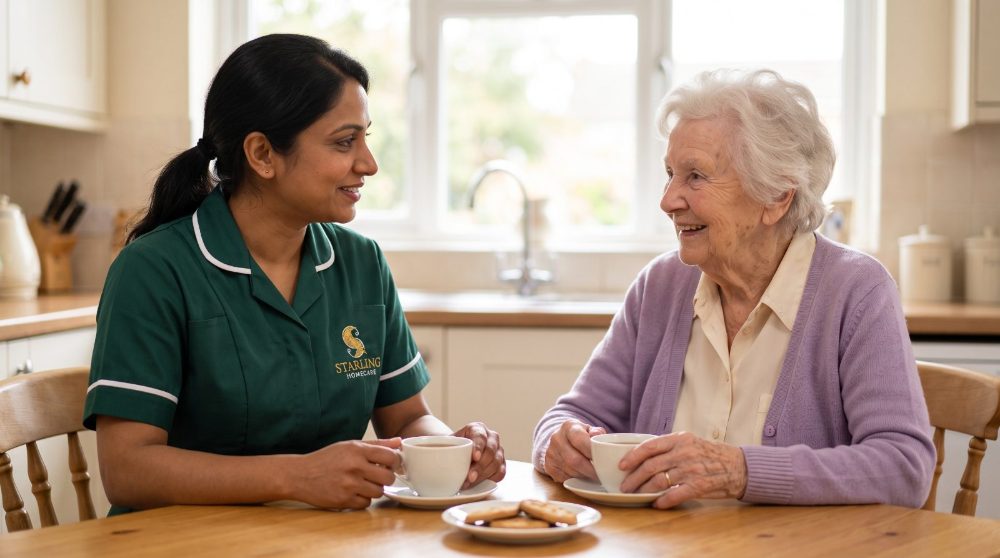
Companionship care in Radlett and Shenley gives an older person regular, friendly company and gentle support at home. Done well, it eases loneliness and helps someone stay connected to the people, places and interests that make life feel like their own.
Loneliness in later life is easy to miss and hard to admit. A parent in Radlett or Shenley may sound fine on the phone, yet go days without any real conversation or company.
This guide explains what companionship care is, why it matters now, and how it works locally, so you can decide, calmly, whether it is right for someone you love.
Why loneliness matters in later life
Loneliness is not a small thing, and the scale of it is easy to underestimate. In a report this year, You Are Not Alone in Feeling Lonely, Age UK found that around 270,000 older people in England, roughly one in forty aged 65 and over, go a whole week without speaking to a friend or family member.
The same research found that people who go a week without that contact are almost three times more likely to feel lonely than those who speak to others more often. Age UK also notes that around a million older people say they feel more isolated at Christmas than at any other time of year.
Awareness efforts such as Loneliness Awareness Week, marked across the UK in June, exist because this quiet problem affects health and wellbeing, not just mood. Regular, warm human contact is one of the simplest things that helps.
What companionship care in Radlett and Shenley looks like
Companionship care is regular support from a professional carer whose main purpose is company and connection, rather than only practical tasks. It is time spent with a person, on their terms.
That might be conversation over a cup of tea, a shared crossword, looking through photographs, or a gentle walk. It can also include getting out to a group, a garden or the shops, and a little help with the small jobs that make a day easier.
The point is not the task. It is the person feeling seen, heard and less alone, with a familiar face they can rely on. It is the heart of our companionship care.
Local support for older people in Radlett and Shenley
Radlett and Shenley have real local life for older people, and companionship care sits comfortably alongside it. Knowing what is nearby can make a first step feel less daunting.
Age UK Hertfordshire runs a free befriending scheme across the county, including the Hertsmere area, matching a volunteer to visit or telephone once a week. Community spaces such as 96 Shenley Road host local groups and activities where people can meet.
Paid companionship care works well beside these. Volunteer befriending is valuable but often limited to short, occasional visits, while a companionship carer can come at the same times each week, stay for longer, and help someone get to a group or an appointment. It is part of how we support home care in Radlett and Shenley.
What companionship visits can include
Every arrangement is shaped around the person, but companionship visits often include a mix of the following:
- Conversation and company, at a pace that suits the person.
- Getting out and about, to a park, a cafe, a club or the shops.
- Time on hobbies and interests, from gardening to letters, puzzles or music.
- A little help with technology, so a video call with grandchildren is possible.
- Support to appointments, and a reassuring check that all is well at home.
Because a carer visits regularly, they often notice small changes early, a low mood, a slip in appetite, so a family can respond before a worry grows.
How we approach companionship care at Starling
Starling Homecare is an independent, family run provider, registered with and regulated by the Care Quality Commission. Companionship may sound simple, but the standards behind it are the same as for any care we give.
We take real care to match a companion carer to the person, thinking about temperament and shared interests, not just availability. We keep that carer consistent, because trust and easy conversation grow with a familiar face.
Families we support often tell us the difference is not only in their relative's mood, but in their own peace of mind. Radlett and Shenley are part of the wider companionship care across Hertfordshire we provide, and if needs grow, companionship can quietly widen into fuller support, with the same team.
Common Questions About Companionship Care in Radlett and Shenley
What does a companionship carer do?
A companionship carer provides regular company and gentle support at home, shaped around the person. That can mean conversation, shared activities, getting out to groups or the shops, help with hobbies and small tasks, and keeping an eye on wellbeing. The focus is connection and reassurance rather than only practical care.
How can I help an elderly parent who is lonely?
Start with honest, unpressured conversation about how they are really feeling, then look at what might help. Local groups, befriending and family visits all play a part, and regular companionship care can add a reliable, familiar presence between them. Even one steady visit a week can make a week feel less empty.
How do I arrange companionship care in Radlett and Shenley?
It begins with a relaxed conversation about the person and what they enjoy, followed by an unhurried assessment. We agree a plan, match a suitable carer, and set regular visits that fit their week. If you are in Radlett, Shenley or nearby, our team can talk it through whenever you are ready.
No one should spend their later years short of company. Companionship care in Radlett and Shenley is a simple, human way to keep an older person connected to the life they value. Our team is here on 01923 988 550 or at [email protected], for a warm and honest conversation whenever it helps.
Arranging Care Is Simple
Starting care can feel like a big step. We keep it calm and straightforward, and we are here to guide you from your very first call.
1. Talk to us
Get in touch by phone or request a callback. We will listen, answer your questions and help you understand the options, so you can decide what feels right in your own time.
2. A home visit and initial consultation
We arrange a visit to understand your routines, your home and what matters most to you. Together we agree an initial consultation and shape the support that feels right.
3. Your care begins
A small, familiar team starts your care, arriving at the agreed times and staying involved as your needs change. We remain your trusted adviser throughout.
Whenever you are ready, we are here to help.