
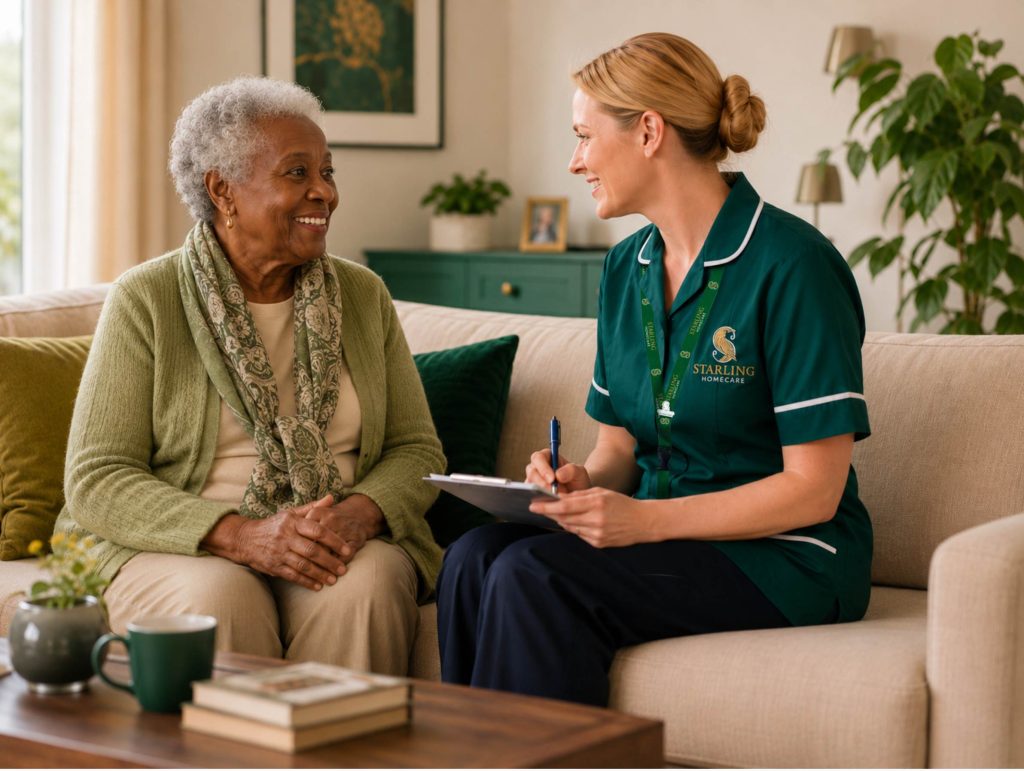
Dementia care at home in St Albans can keep someone safe in the place they know best, with the right support and a few sensible safeguards. Familiar surroundings often help someone with dementia feel calmer and more themselves.
The aim of good care at home is to protect that comfort while keeping a steady eye on the things that change.
If you are worried about a parent or partner in St Albans, you are not alone in asking how long home can stay the safe choice. It is one of the most common questions families bring to us.
Dementia changes over time, and so do the risks. A home that suited someone last year may need small adjustments this year.
The reassuring part is that staying safe at home is rarely about one big decision. It is usually a series of small, steady ones.
Can someone with dementia live safely at home?
For many people, yes, especially in the earlier stages. With routine, a safe environment and regular support, home can remain the right place for a long time.
Safety tends to rest on three things. A familiar daily rhythm, a home set up to reduce hazards, and someone noticing changes early.
In our experience, families we support across St Albans often manage well once they have a clear plan and the right help in place.
How is technology helping people with dementia stay at home?
New approaches are making it easier to spot problems before they become emergencies. In 2026 Imperial College Healthcare NHS Trust launched MinderCare, an NHS service that supports people with dementia remotely in their own homes.
It uses discreet sensors, including door and movement sensors and a mat under the mattress, to track daily patterns and sleep. None of the devices record sound or video.
A clinical team reviews the information each day, watching for early signs of infection, disturbed sleep or unusual activity, with the aim of reducing avoidable hospital admissions.
This will not suit everyone, and it is currently an early-stage NHS service in North West London. But it shows where care at home is heading, towards steady attention rather than constant alarm.
What practical changes make a home safer?
Small changes often make the biggest difference. Good lighting, clear walkways and removing loose rugs all reduce the risk of falls.
Labels on cupboards, a visible clock and a simple daily routine can ease confusion. A short written note by the door, about keys and the cooker, can help too.
We always shape these ideas around the person, never imposing a checklist. What reassures one family may unsettle another.
What changes are worth watching for?
Knowing what to look out for helps you act early. Eating or drinking less, missed medication, or a fridge of out-of-date food can all be quiet signals.
Unsteadiness, new bruises, or becoming confused in the evening are worth noting too. So is someone becoming withdrawn, or anxious about leaving the house.
None of these mean home is no longer safe. They are prompts to review the support in place, and to ask for help sooner rather than later.
Where can you get a dementia diagnosis and support in St Albans?
If memory changes are new, the first step is usually a GP. In Hertfordshire, the Early Memory Diagnosis and Support Service (EMDASS), run by Hertfordshire Partnership University NHS Foundation Trust, assesses memory concerns after a referral.
Memory Support Hertfordshire offers a local helpline, on 0300 131 3946 from Monday to Friday, for anyone affected by dementia or mild cognitive impairment.
These services work alongside good care at home. A diagnosis tends to open the door to the right support, rather than close one.
How does home care support someone with dementia?
Dementia care at home is about consistency and knowing the person. The same carer, arriving at the same time, can be quietly reassuring.
Carers can help with washing, dressing, meals and medication prompts, while noticing the small changes that matter. You can read more about our dementia care support at home.
We also support families who began with a different question, such as how to arrange dementia support after a diagnosis, and we provide home care in St Albans.
Can home care and NHS support work together?
They often do, and well. NHS services such as memory clinics and remote monitoring focus on health, while home care supports daily life at home.
A carer who knows the person can pass on useful observations to a GP or family, and keep to a routine that suits them. The two sides complement each other.
In our experience, families feel most settled when everyone involved shares the same simple picture of how their relative is doing.
Common Questions About Dementia Care at Home in St Albans
Can a person with dementia live at home alone?
Often yes in the earlier stages, with support and safeguards in place. As dementia progresses, more help is usually needed, whether from visiting carers, family or live-in care. The right balance depends on the person and is best reviewed regularly.
How do I get a dementia assessment in St Albans?
Start with your GP, who can refer to the Early Memory Diagnosis and Support Service (EMDASS) in Hertfordshire. The service assesses memory concerns and helps arrange support after a diagnosis. Your GP can also check for other causes of memory changes.
What support is there for families caring for someone with dementia?
Local help includes Memory Support Hertfordshire, the Alzheimer's Society and Hertfordshire County Council's adult care services. Professional home care can also share the load, from a few visits a week to live-in support. Asking early tends to make the path smoother.
Dementia care at home is rarely simple, and every situation is different. What helps most is steady, familiar support and noticing change early.
If you are in St Albans or nearby and would like to talk things through, our St Albans team is available on 01727 324 127 or at [email protected].
Arranging Care Is Simple
Starting care can feel like a big step. We keep it calm and straightforward, and we are here to guide you from your very first call.
1. Talk to us
Get in touch by phone or request a callback. We will listen, answer your questions and help you understand the options, so you can decide what feels right in your own time.
2. A home visit and initial consultation
We arrange a visit to understand your routines, your home and what matters most to you. Together we agree an initial consultation and shape the support that feels right.
3. Your care begins
A small, familiar team starts your care, arriving at the agreed times and staying involved as your needs change. We remain your trusted adviser throughout.
Whenever you are ready, we are here to help.