
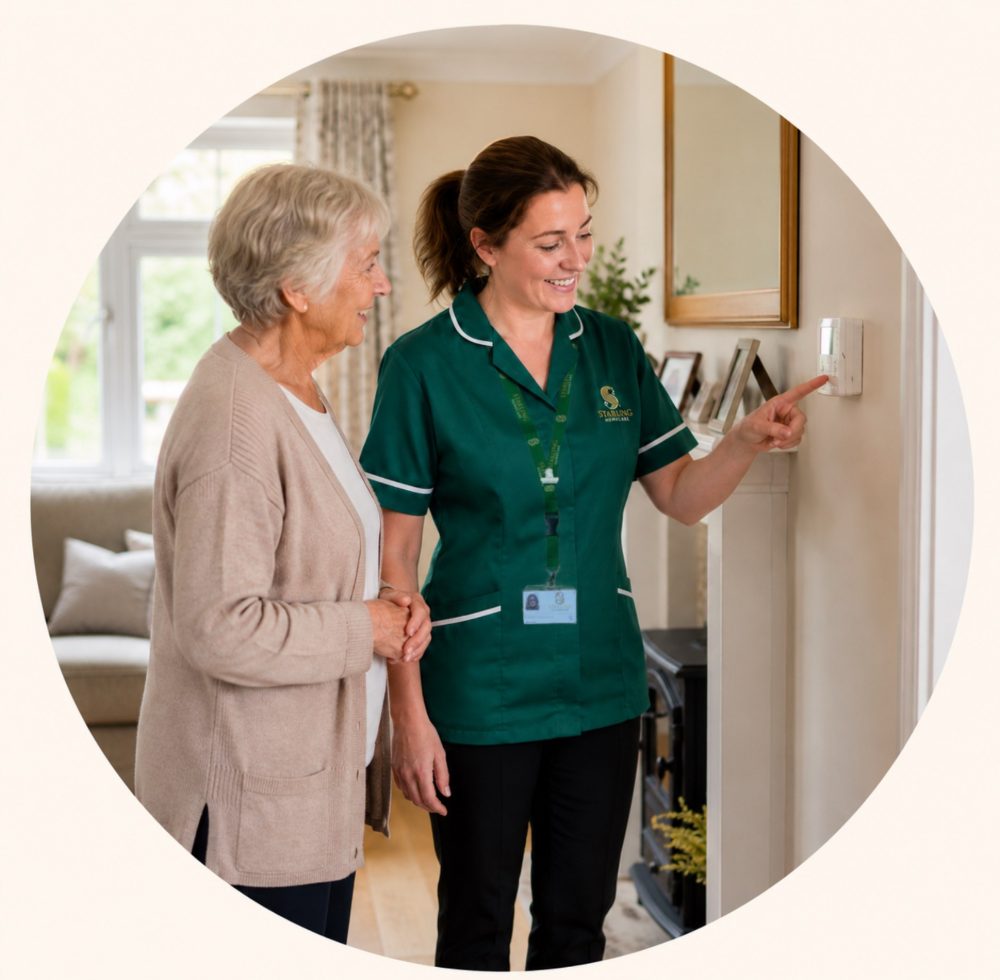
In very hot weather, an older person at home needs more to drink, a cool place to rest, and someone keeping an eye out. Good home care in hot weather builds those simple safeguards into the day. That helps a vulnerable relative in Harpenden stay safe.
With a rare red extreme heat warning in place this week, this matters now rather than in theory.
The Met Office has issued a red extreme heat warning for parts of England. Temperatures are forecast to reach around 38°C on Wednesday 24 and Thursday 25 June 2026. A red warning is the highest level, used when hot weather carries a real risk to life.
Older people are among those most at risk, alongside young children and people with existing health conditions. If you have an older relative in Harpenden, the next few days are worth a little extra attention.
Why is hot weather more dangerous for older people?
The body manages heat less well as we age. Older people tend to sweat less and feel thirst less keenly. They are also more likely to take medicines that affect how the body holds water.
That combination means someone can become dangerously overheated or dehydrated without obviously feeling unwell. A person living alone may not notice the warning signs, or may not want to make a fuss.
This is why checking in matters so much during a heatwave. A short visit or call to make sure someone is drinking and keeping cool can prevent a serious problem.
What are the signs of heat exhaustion and heatstroke?
The NHS describes heat exhaustion as feeling unwell in the heat. The signs include tiredness, dizziness, headache, feeling sick, heavy sweating, cramps and pale, clammy skin. It can usually be eased by moving the person somewhere cool, giving them water and helping them rest.
The key rule is the 30 minutes that follow. If someone does not feel better after half an hour in a cool place with fluids, treat it as more serious. The same applies if they show confusion, a very high temperature or loss of consciousness.
Heatstroke is a medical emergency. Call 999, keep cooling the person while you wait, and put them in the recovery position if they lose consciousness.
Home care in hot weather: practical ways to keep an older relative cool
Small steps make a real difference in extreme heat. The aim is steady hydration, a cool space, and keeping activity to the cooler ends of the day.
Offer drinks often through the day, not only when someone asks, and keep a glass within easy reach. Cool foods with a high water content, such as chilled fruit, help when someone is not keen to drink.
Shade the rooms that catch the sun, and let cooler evening air in once the temperature drops outside. Keep medicines below 25°C, or in the fridge where the label allows. Light, loose clothing and a cool, damp flannel on the neck also help.
How home care in hot weather helps in Harpenden
Regular home care comes into its own in hot weather, because it builds checking-in into the day. A carer who visits can make sure someone is drinking, eating and keeping cool. They can also act early if the person seems unwell.
For families who live further away, that reassurance is hard to overstate. A familiar person looks in, tops up drinks and notices a change. You are not relying on a single phone call to judge how a parent is coping.
Day to day, our personal care at home can include help with washing and dressing for the weather, light meals and drinks, and prompting medicines safely. In a heatwave, that ordinary support quietly becomes a safeguard.
Looking out for older neighbours and relatives
Extreme heat is a moment to think about the people around us, not only those already receiving care. The advice from the NHS and the UK Health Security Agency is consistent. Check on older or unwell friends, relatives and neighbours during hot spells.
A knock on the door, a quick call, or making sure someone has cool water and a shaded room can matter more than it sounds. The same steady attention that helps in the heat helps in other ways too, as our guidance on keeping an older relative well in hot weather in Berkhamsted explains.
Common Questions About Hot Weather and Older People in Harpenden
Why is hot weather more dangerous for older people?
Older bodies hold and lose heat less well, and the feeling of thirst often fades. Some common medicines also affect how the body keeps fluid. Someone can therefore become too hot or dehydrated before they feel any warning, and the risk is greatest for those living alone.
What should I do if an older relative shows signs of heatstroke?
Heatstroke is a medical emergency, so call 999 straight away. While you wait, move them somewhere cool, help them lie down, and cool their skin with water or a damp cloth. Heatstroke differs from heat exhaustion, which can usually be eased by rest, fluids and a cool room within about 30 minutes.
How can a carer help an older person during a heatwave?
A carer visiting through the day can make sure someone drinks regularly, eats light meals, keeps their home cool and takes medicines safely. They are also there to spot the early signs of heat illness and act before it becomes serious. For a relative living alone, that steady presence is real reassurance.
A heatwave passes, but for an older person living alone the risk over a few hot days is real. A little planning, regular drinks and someone keeping an eye out are usually all it takes.
If you are in Harpenden and would like help arranging home care during the hot weather, our local team is here. You can reach us on 01582 824 830 or at [email protected], or read more about home care in Harpenden.
Arranging Care Is Simple
Starting care can feel like a big step. We keep it calm and straightforward, and we are here to guide you from your very first call.
1. Talk to us
Get in touch by phone or request a callback. We will listen, answer your questions and help you understand the options, so you can decide what feels right in your own time.
2. A home visit and initial consultation
We arrange a visit to understand your routines, your home and what matters most to you. Together we agree an initial consultation and shape the support that feels right.
3. Your care begins
A small, familiar team starts your care, arriving at the agreed times and staying involved as your needs change. We remain your trusted adviser throughout.
Whenever you are ready, we are here to help.