
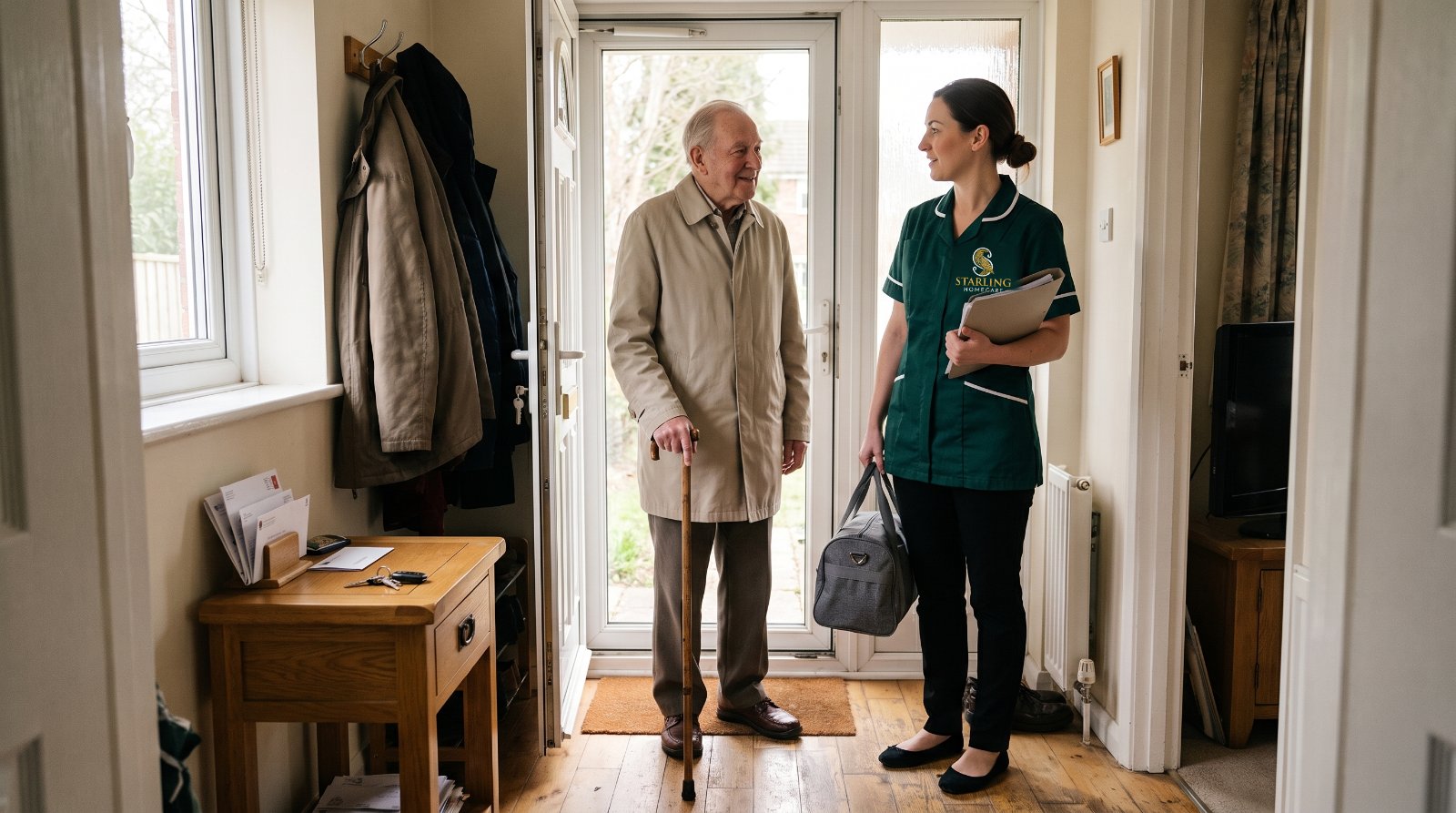
You can arrange home care after hospital in Hemel Hempstead while your relative is still on the ward. That timing matters more than most families realise. Across England, thousands of people wait extra days to leave hospital because support outside it is not yet in place.
A hospital stay has a natural end point: the day the doctors say someone is medically ready to go home. What happens next often depends less on medicine and more on organisation.
This guide explains why people get stuck on wards. It also covers what Hemel Hempstead families can do before discharge, and how home care helps the return go well.
Why do people wait in hospital when they are ready to leave?
The Nuffield Trust's QualityWatch programme tracks discharge delays across England. In January 2026, an average of 13,750 patients a day were fit to leave hospital but still waiting. That is 12 per cent more than in January 2022.
The most common reason for delay in 2025 was capacity. The care a person needed after hospital was simply not yet available. Among patients in hospital for a week or more, that affected close to 3,700 people every week.
The same analysis is blunt that long stays in hospital cause harm. An older person can lose strength, confidence and routine quickly on a ward. Getting home promptly, with the right support waiting, is not just convenient. It is part of the recovery.
Where hospital care happens for Hemel Hempstead families
For most people in Hemel Hempstead, an acute hospital stay means Watford General. It is West Hertfordshire Teaching Hospitals NHS Trust's main site for inpatient emergency care.
Hemel Hempstead Hospital on Hillfield Road plays a different role, with outpatient clinics, diagnostics and stroke rehabilitation beds. Central London Community Healthcare NHS Trust also runs St Peter's ward there as a rehabilitation unit.
So the journey home may run directly from Watford, or via a spell of rehabilitation closer to town. Either way, the question the discharge team will ask is the same: what support is waiting at home?
What families can do before discharge day
Speak to the ward early. Every ward has a discharge process. It works better when the family joins in early rather than waiting to be asked.
Be honest about what was already hard before the admission. If the stairs, meals or washing were becoming difficult months ago, say so. The picture before hospital matters as much as the picture after.
Then arrange home care so it begins on the day of discharge, not some days later. In our experience this is the single most useful thing a family can do. It also gives the discharge team confidence that home is safe, and that can bring the leaving date forward.
The small practicalities earn their place too. Keys that work, heating on, food in the fridge, and a clear, well-lit route between bed and bathroom all help.
How home care after hospital in Hemel Hempstead works
In the first days home, a carer picks up what the ward was quietly doing. That means washing and dressing, regular meals, prompts for new medication, and the steady return of routine. Everything follows the advice that came home in the discharge summary.
Where the NHS provides short-term reablement, private home care can run alongside it or continue once it ends. Support does not have to stop dead at an arbitrary week.
We shape visits around the person rather than a fixed menu, and we review the frequency as confidence returns. We are regulated by the Care Quality Commission. A local team delivers our home care in Hemel Hempstead, and they will already know the road, not just the address. It is the same approach we describe for Hitchin families leaving Lister Hospital.
When a short recovery becomes something longer
Sometimes a hospital stay simply interrupts a good, independent life, and after a few supported weeks the visits end. That is always the aim.
Sometimes, though, a stay draws attention to changes that were happening slowly anyway. The honest moment comes at the end of recovery. Support may stop, or it may settle into a smaller ongoing arrangement that keeps the next admission further away.
Our post-hospital care is built around that honest review, and around the Hemel Hempstead community we work in every day.
Common Questions About Home Care After Hospital in Hemel Hempstead
Can home care be arranged while someone is still in hospital?
Yes, and it is the best time to do it. We can talk with the family, plan the first weeks and have care ready for the day someone comes home. Confirming support early also gives the hospital confidence that discharge is safe.
Who should we tell that care is in place at home?
Tell the ward’s nursing team or discharge coordinator. They record what will be waiting at home, and it feeds the decision about when someone can leave. Give them the provider’s name and the planned start date.
Is it too late to arrange help once someone is already home?
Not at all. The first weeks after discharge are exactly when extra help still makes a real difference. Care can usually begin quickly, and if the return home has been harder than expected, that is a reason to call, not a failure.
Coming home from hospital should feel like progress, not a leap into the unknown. With support arranged before the ward says goodbye, it usually is. If someone in your family is in hospital now, it is worth thinking ahead to their return. Our Hemel Hempstead team is on 01442 954 137, or you can email [email protected].
Arranging Care Is Simple
Starting care can feel like a big step. We keep it calm and straightforward, and we are here to guide you from your very first call.
1. Talk to us
Get in touch by phone or request a callback. We will listen, answer your questions and help you understand the options, so you can decide what feels right in your own time.
2. A home visit and initial consultation
We arrange a visit to understand your routines, your home and what matters most to you. Together we agree an initial consultation and shape the support that feels right.
3. Your care begins
A small, familiar team starts your care, arriving at the agreed times and staying involved as your needs change. We remain your trusted adviser throughout.
Whenever you are ready, we are here to help.