
After a dementia diagnosis, a set of practical doors open that were closed while you were waiting: NHS post-diagnostic support, a benefit that is not means tested, a council tax disregard, legal planning while it is still possible, and care at home shaped around the person. Knowing which door to try first is what turns a hard week into a plan.
New research from Alzheimer's Society, reported on 3 September 2026, found that 45 per cent of people waited more than six months for a dementia diagnosis after first seeking help. Among those supporting someone with a diagnosis, 46 per cent said the wait had affected their work, 37 per cent had used personal savings and 30 per cent felt their lives had been placed on hold.
The same survey found something families in Hertfordshire tell us too. Nine in ten carers said at least one part of life became easier once the diagnosis was confirmed: understanding the symptoms, supporting the person better, and finding it simpler to get information and speak to professionals.
That is the point of this article. The diagnosis is hard news, and it is also the key that unlocks support. Here is what it opens in Hertfordshire, in the order we would suggest working through it.
What NHS support follows a dementia diagnosis in Hertfordshire?
In Hertfordshire, diagnosis and the first months afterwards usually run through the Early Memory Diagnosis and Support Service, known as EMDASS, part of Hertfordshire Partnership University NHS Foundation Trust. Referral is through the GP or a hospital doctor.
EMDASS provides a pre and post diagnostic pathway for the person and their carers, working with Alzheimer's Society and the county council's adult care services. The trust describes a support period of 38 weeks, after which the person is transferred to whichever service fits their assessed needs, with Alzheimer's Society available throughout.
The practical step is to ask, at the diagnosis appointment, what post-diagnostic support you have been referred to and who your named contact is. If you leave without a name, ask the GP surgery to check.
Which benefit should you look at first after a dementia diagnosis?
Attendance Allowance, for anyone over State Pension age who needs help with personal care or supervision because of the condition. It is not means tested, so savings and income do not count, and it depends on the help the person needs rather than on whether anyone is currently providing it.
Families often assume they will not qualify because the person is coping. The test is about the help needed, not the help already in place. Our Attendance Allowance guide sets out the two rates, who qualifies and how the form is completed.
Does a dementia diagnosis change council tax?
It can. A person with dementia can be disregarded for council tax as severely mentally impaired if a doctor certifies a severe and permanent impairment and they are entitled to a qualifying benefit, of which Attendance Allowance is the most common.
Alzheimer's Society explains the effect: someone who lives alone and is disregarded pays no council tax at all, and a partner living with a disregarded person receives the 25 per cent single person's discount. The form comes from the district or borough council, and the disregard can be backdated, though each council sets its own limits.
This is one reason to make the Attendance Allowance claim early. It is often the qualifying benefit for the council tax disregard as well.
Why does legal planning matter more straight after a diagnosis?
Because a lasting power of attorney can only be made while the person has the mental capacity to understand it, and a diagnosis does not remove capacity by itself. The earlier it is done, the more say the person has in who will speak for them later.
There are two types, one for property and financial affairs and one for health and welfare, and most families need both. Our guide to lasting power of attorney and care explains the difference, the registration process and what happens if it is left too late.
We would put this near the top of the list. It is the item families most often tell us they wish they had done sooner.
How do you get a care assessment, and a carer's assessment, in Hertfordshire?
Anyone can ask Hertfordshire County Council for a care needs assessment, and the person's carer is entitled to a free carer's assessment of their own. The council's carers pages also offer an in-case-of-emergency plan, which sets out what should happen if the carer is suddenly unable to help.
The assessment is worth having even if the family expects to arrange and pay for care privately. It records needs formally and opens the door to council support later if circumstances change.
Memory Support Hertfordshire, a partnership between Age UK Hertfordshire, Alzheimer's Society and Carers in Hertfordshire, can talk families through the local picture before and after the assessment.
What does care at home look like in the early months?
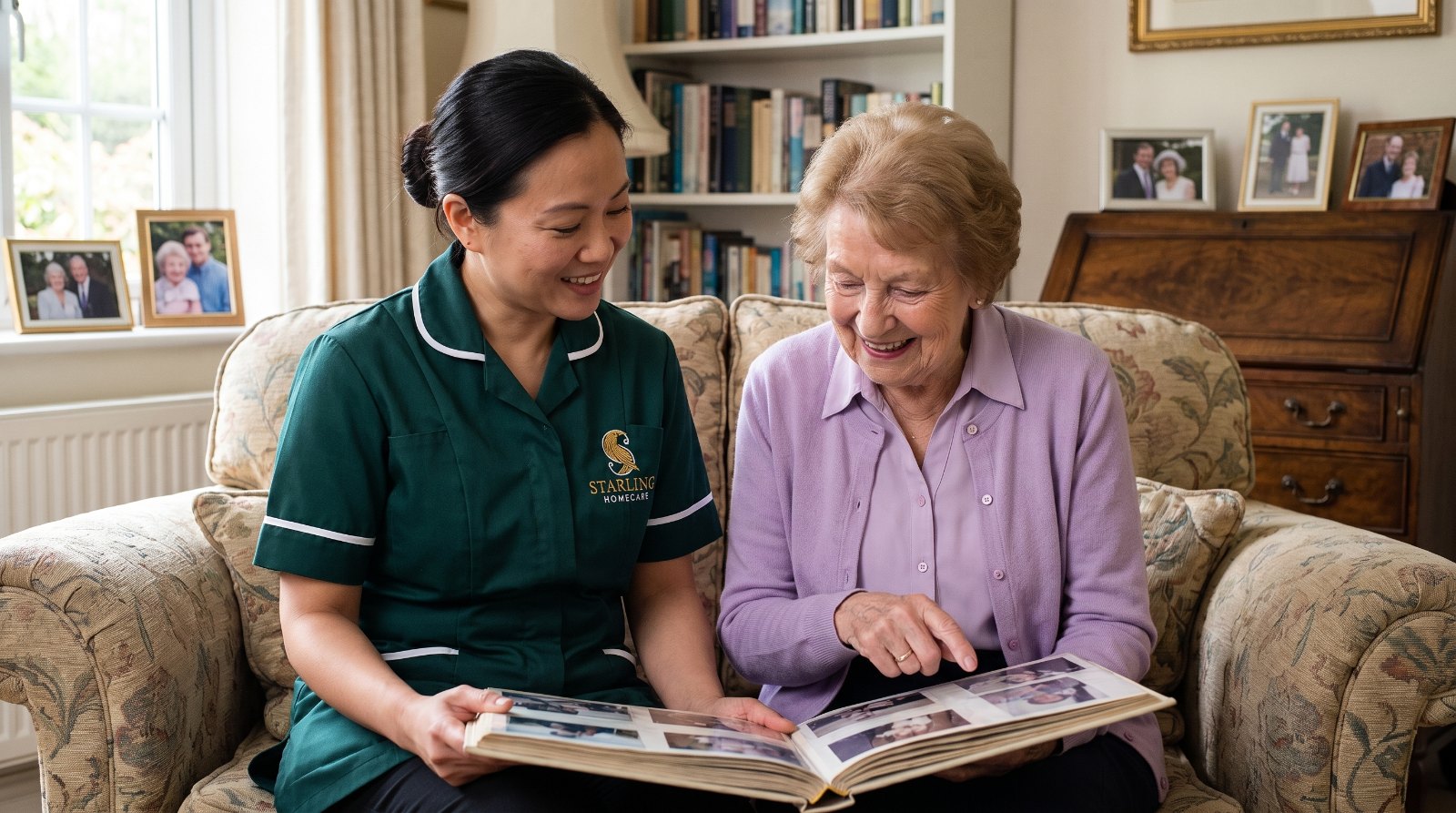
Usually lighter than families fear. Early support after a dementia diagnosis is often a few visits a week to hold the routine steady: a morning start, a meal, a medication prompt, a walk, and a familiar face who notices what has changed since last time.
The value at this stage is continuity. A small, consistent team learns the person's habits while they can still explain them, which makes every later stage easier. Our guide to arranging dementia care at home explains how a first care plan is put together, and our dementia and Alzheimer's care service describes what regular support covers.
Starling Homecare is regulated by the Care Quality Commission and works with families across Hertfordshire, from St Albans and Harpenden to Hemel Hempstead, Hitchin and Welwyn Hatfield.
Common Questions About Life After a Dementia Diagnosis in Hertfordshire
What should you do first after a dementia diagnosis?
Ask the memory service who your post-diagnostic contact is, then start the Attendance Allowance claim and the lasting power of attorney while the person can take part in both. Those three steps unlock most of the others, including the council tax disregard and a formal record of needs.
Is Attendance Allowance means tested for someone with dementia?
No. Attendance Allowance is not means tested and does not depend on savings or income. It is assessed on the help the person needs with personal care or supervision, and it is one of the qualifying benefits for the council tax severe mental impairment disregard.
Who provides dementia support after diagnosis in Hertfordshire?
The NHS Early Memory Diagnosis and Support Service, run by Hertfordshire Partnership University NHS Foundation Trust, provides post-diagnostic support for around 38 weeks, working alongside Alzheimer's Society. Memory Support Hertfordshire, run by Age UK Hertfordshire with its partners, offers information and advice at any stage.
A list you can work through
The waiting is the part nobody can shorten for you. What follows the diagnosis can be managed, one door at a time, and most of the practical help in Hertfordshire is there to be asked for.
If you would like to talk through what care at home could look like after a dementia diagnosis, our St Albans office is on 01727 324 127 or at [email protected].
The Alzheimer's Society research, the NHS Hertfordshire memory service description, the council tax rules and the Hertfordshire County Council carers information in this article were checked on 7 September 2026.
Arranging Care Is Simple
Starting care can feel like a big step. We keep it calm and straightforward, and we are here to guide you from your very first call.
1. Talk to us
Get in touch by phone or request a callback. We will listen, answer your questions and help you understand the options, so you can decide what feels right in your own time.
2. A home visit and initial consultation
We arrange a visit to understand your routines, your home and what matters most to you. Together we agree an initial consultation and shape the support that feels right.
3. Your care begins
A small, familiar team starts your care, arriving at the agreed times and staying involved as your needs change. We remain your trusted adviser throughout.
Whenever you are ready, we are here to help.